
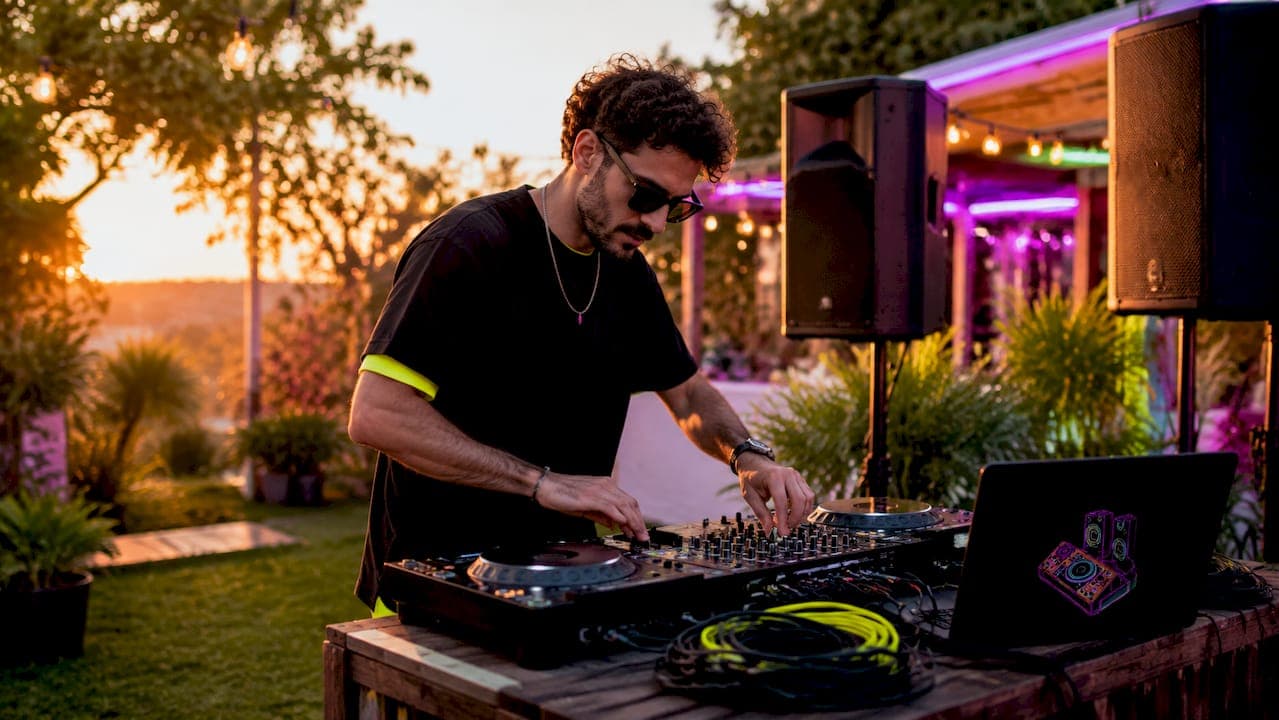
A party DJ equipment essentials list is the complete set of gear required to deliver professional sound and a captivating atmosphere at any event. The core categories are controllers, headphones, PA speakers, lighting, and cables. Miss one, and your event suffers. Get all five right, and you create the kind of night guests talk about for weeks. This guide covers every item on a solid DJ gear checklist, with specific model recommendations and setup advice built for aspiring hosts and event organizers, not career DJs.
1. what are the must-have DJ controllers?
A complete DJ setup includes playback equipment, a mixer, monitoring gear, and a PA system. The controller is where it all starts. For beginners and mobile DJs, an all-in-one DJ controller is more practical than separate CDJs and mixers because it is easier to transport and faster to set up.
Two models stand out for party hosting. The Pioneer DDJ-FLX10 offers four channels, a built-in mixer, and direct compatibility with Rekordbox and Serato DJ Pro. The Denon SC Live 4 goes further with a built-in Android engine, meaning you can perform without a laptop entirely. Both units handle the EDM DJ equipment basics explained in most beginner guides: beat matching, EQ control, and track cueing.
- Built-in mixer removes the need for a separate unit
- Microphone input lets the host MC between tracks
- USB connectivity supports plug-and-play media loading
- Jog wheels and performance pads allow live remixing
Pro Tip: Test microphone input quality well before the event. Entry-level controllers sometimes produce distorted announcements, which kills the energy during crowd callouts.
2. which headphones and monitors do you actually need?
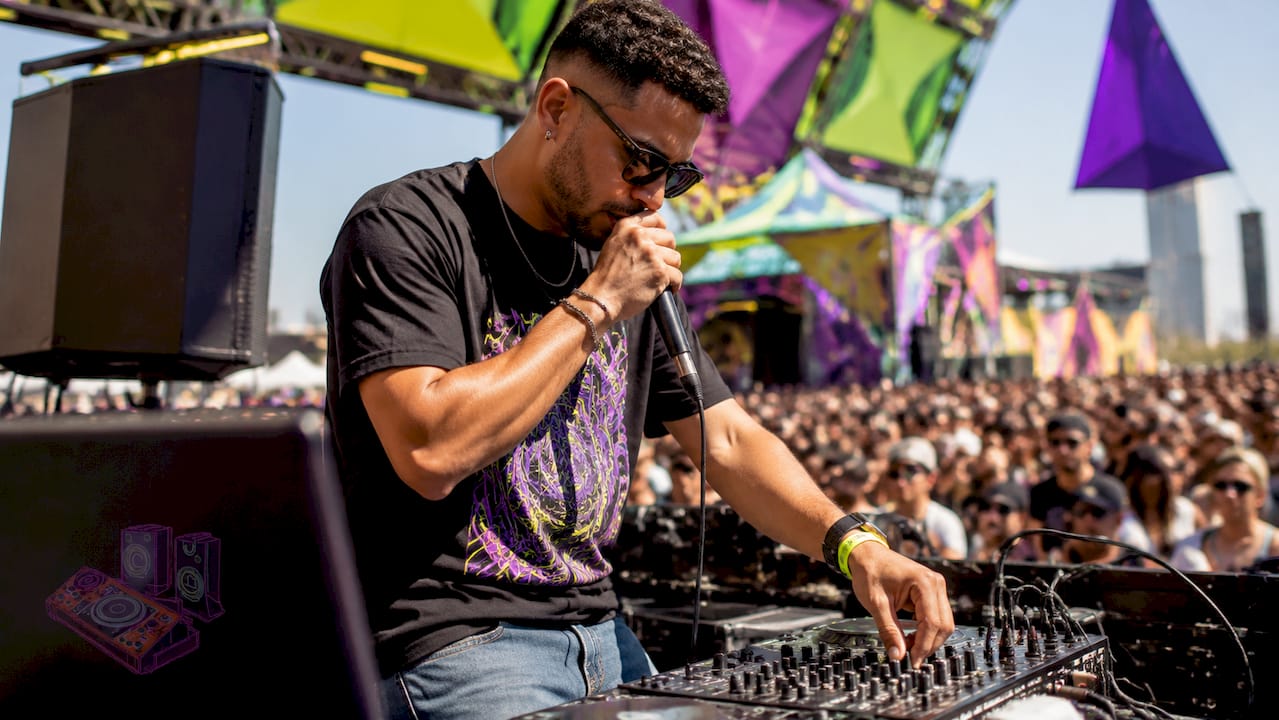
Closed-back headphones are the standard for DJ performance because they block crowd noise and let you cue the next track cleanly. The Sennheiser HD 25 remains the industry benchmark for durability, sound isolation, and replaceable parts. At around $150, it punches well above its price point.
Booth monitors are the small speakers placed at the DJ booth facing the performer. They let you hear the live mix as the audience hears it, which is critical for adjusting levels in real time. Without a booth monitor, you are mixing blind. A compact active monitor like the Yamaha HS5 or a small powered speaker works well in most party setups.
- Carry a backup pair of headphones. One cable failure mid-set ends your night.
- Single-ear monitoring is a skill worth practicing before the event.
- Headphone amplifiers improve signal quality when running long cable runs from the mixer.
3. what PA speakers and subwoofers deliver the best party sound?
High-quality sound, not just loud volume, creates a memorable event. Relying on a venue's built-in sound system often leads to inconsistent results. Bring your own PA every time.
PA speakers come in two types. Active speakers have a built-in amplifier, so you plug them directly into the mixer. Passive speakers require a separate power amplifier. For party hosting, active speakers are the clear choice. They reduce setup time and eliminate one more potential failure point.
| Speaker Model | Type | Power Output | Best For |
|---|---|---|---|
| dB Technologies B-Hype 10 | Active | 400W | Small to mid-size rooms |
| Electro-Voice ZLX-15BT | Active | 1,000W | Mid-size venues and outdoor events |
| QSC K12.2 | Active | 2,000W | Large rooms and high-energy parties |
| Electro-Voice ELX200-18SP | Active Subwoofer | 1,200W | Bass reinforcement for EDM events |
Subwoofers are optional for small rooms but become necessary above 100 guests. The Electro-Voice ELX series subwoofers pair cleanly with most active tops. Speaker stands keep the sound projected at ear level rather than bouncing off the floor, which dramatically improves clarity across the room.
Pro Tip: Position PA speakers at the front corners of the dance floor angled inward at roughly 45 degrees. This covers the room evenly without creating dead zones near the walls.
4. which lighting gear creates the best party atmosphere?
Simple, automated LED lighting synced to music beats dramatically improves party atmosphere without requiring complex lighting consoles. Thoughtful placement with basic uplighters can transform a room more effectively than expensive high-end gear. This is the most underestimated item on any EDM DJ arrival setup party checklist.
The Chauvet ILS Command is a wireless lighting controller that syncs multiple Chauvet fixtures without DMX cables. It is plug-and-play, which makes it ideal for hosts who are not lighting technicians. Pair it with a set of portable LED uplighters and a single moving head or beam effect for a complete look.
- LED uplighters placed along walls create depth and color without blinding guests
- Beat-synced strobes and derby lights work best on the dance floor, not the entire room
- Avoid fog machines near smoke detectors unless you have venue clearance in advance
- Warm white uplighting works for cocktail hours; saturated colors work for peak dance time
Color temperature matters more than most hosts realize. A room flooded with harsh white light feels like a grocery store. Switching to deep blues, purples, and ambers during peak hours signals to guests that the energy is shifting upward.
5. what cables and accessories prevent technical failures?
Cables are the leading cause of gear failures at live events. A well-labeled, organized set of spares is non-negotiable. The recommended minimum is 4 XLR cables, 2 RCA cables, 3.5mm-to-XLR adapters for emergency AUX connectivity, and multiple IEC power cables.
Carry more than you think you need. A single bad XLR cable can drop an entire speaker channel mid-set. Labeling cables by type and length with colored gaffer tape takes ten minutes at home and saves thirty minutes of panic at the venue.
Gaffer tape and power distribution boards create tidy, safe setups and prevent trip hazards at event venues. A power distribution board with surge protection is preferable to a standard extension cord because it protects your gear from voltage spikes.
Pro Tip: Carry multiple USB drives formatted for your controller, plus a backup laptop or phone with your full playlist. Media emergencies happen at the worst possible moment.
Additional accessories worth packing:
- Gaffer tape (2 rolls minimum, not duct tape)
- Power distribution board with surge protection
- Laptop stand or DJ table riser
- Spare USB drives with full music library
- Headphone adapter (6.35mm to 3.5mm)
- Flashlight or headlamp for dark booth setups
- Laminated gear checklist stored inside your case
A laminated gear checklist stored in your case prevents forgetting small but critical items like power adapters, especially under the pressure of a fast setup. Professional DJs use this trick consistently.
6. how does an EDM party sound equipment rental work?
Renting gear is a smart option for one-time events or hosts who do not want to invest in a full system. An EDM party sound equipment rental typically covers PA speakers, subwoofers, a DJ controller, and basic lighting. Rental companies like Guitar Center Rentals and local AV houses offer daily rates that include delivery and basic setup support.
Before signing a rental agreement, confirm three things. First, check that the speaker wattage matches your venue size. Second, verify that all cables and adapters are included. Third, ask whether a technician is available on-site or on call. Rental gear without support is a risk at a first event.
Renting also lets you test gear before buying. Running a Pioneer DDJ-FLX10 at a real party tells you far more than any review. If it fits your workflow, you can buy with confidence.
7. what does DJ equipment maintenance actually require?
DJ equipment maintenance explained simply: clean, store, and test your gear after every event. Dust and moisture are the two biggest threats to electronics. Use compressed air on controller jog wheels and faders after each use. Wipe speaker grilles with a dry cloth. Store cables coiled loosely, never tightly wrapped around a unit.
Faders and crossfaders on mixers wear out faster than any other component. Fader lubricant like Caig DeoxIT F5 extends their life significantly. Apply a small amount every 6 months if you use the gear regularly.
Test every piece of gear at home 48 hours before an event. Do not discover a blown tweeter at the venue. A quick 30-minute sound check at home catches 90% of potential failures before they become your problem in front of a crowd.
Key takeaways
A complete party DJ equipment essentials list requires a reliable controller, quality headphones, owned PA speakers, beat-synced lighting, and a full set of labeled spare cables working together.
| Point | Details |
|---|---|
| Controller choice matters | All-in-one units like Pioneer DDJ-FLX10 reduce setup time and complexity for party hosts. |
| Own your PA system | Venue sound systems deliver inconsistent results; bring your own active speakers every time. |
| Cables prevent failures | Pack at least 4 XLR cables, 2 RCA cables, and multiple IEC power cords as minimum spares. |
| Lighting transforms rooms | Beat-synced LED uplighting changes party energy more than expensive audio upgrades. |
| Test gear 48 hours early | A home sound check before every event catches failures before they reach the venue. |
What i've learned running setups that can't fail
Every host I've talked to who had a bad event traces it back to one of two things: they trusted the venue's gear, or they skipped the pre-event check. Neither is a gear problem. Both are preparation problems.
Arriving 60–90 minutes early is not optional. That window lets you check venue power capacity, identify ground hum issues, and confirm speaker placement before guests walk in. I've seen setups where the venue's single 15-amp circuit couldn't handle a PA and lighting rig simultaneously. Finding that out at load-in is manageable. Finding it out when the music cuts mid-set is not.
The lighting lesson took me longer to learn. I used to treat it as secondary, something to add if there was time. That was wrong. A well-lit room with average sound beats a dark room with great sound every single time. Guests feel the atmosphere before they consciously hear the music. Two LED uplighters and a single moving head can do more for a party than a second subwoofer.
My one non-negotiable rule: never rely on borrowed or venue-supplied cables. Bring every cable you need, plus spares. The $20 you save by not buying an extra XLR is not worth the risk.
— Otterpop
Get your party setup right with deimos sound
Building a gear list from scratch takes time, and the wrong choices cost real money. Deimos Sound takes the guesswork out of event audio and lighting by pairing expert gear knowledge with full-service event support.
Whether you are planning a backyard party, a corporate event, or a large venue celebration, Deimos Sound provides professionally curated sound and lighting packages starting at $75 per hour. Browse the Deimos Sound store for curated DJ gear suited to every event size and budget. Or visit Deimos Sound directly to book a consultation and get a setup recommendation tailored to your specific venue and guest count.
FAQ
What is the minimum DJ gear needed for a house party?
The minimum setup is a DJ controller, a pair of active PA speakers, headphones, and the necessary cables. Adding a subwoofer and basic LED lighting significantly improves the experience for 50 or more guests.
Should i rent or buy DJ equipment for a one-time event?
Renting is the smarter choice for a single event. Rental companies like Guitar Center Rentals provide PA speakers, controllers, and lighting at daily rates that cost far less than purchasing the same gear outright.
How many XLR cables should i bring to a party gig?
Bring a minimum of 4 XLR cables as the recommended standard for any party setup. Spare cables prevent a single failure from taking down a speaker channel mid-event.
Do i need a subwoofer for a small party?
A subwoofer is not required for rooms under 50 guests. For EDM-focused events or larger spaces, a single active subwoofer like the Electro-Voice ELX200-18SP adds the low-end impact that makes a dance floor feel alive.
How early should a DJ arrive to set up for an event?
Arriving 60–90 minutes early gives enough time to check venue power, test speaker levels, and resolve any technical issues before guests arrive.