
A professional DJ is the architect of your event's emotional and musical experience, shaping atmosphere and guest engagement from the first track to the last. Where a prerecorded playlist simply fills silence, a skilled DJ reads the room, builds momentum, and crafts a musical journey that guests feel long after the night ends. Understanding why professional DJ services transform events goes beyond sound quality. It comes down to crowd reading, emotional timing, and the kind of technical mastery that turns a gathering into a memory. Deimos Sound brings exactly that combination to every event it serves.
Why does a professional DJ elevate music events?
A professional DJ is defined in the industry as a live music curator, not just a playback operator. The distinction matters enormously for event organizers. A curated musical journey, built in real time, creates emotional connections that no static playlist can replicate. Deimos Sound's approach reflects this: every set is shaped around the crowd, the venue, and the moment.
The core of this impact lies in three interconnected skills. First, crowd reading: the ability to sense energy shifts and respond with the right track at the right time. Second, emotional timing: knowing when to build tension, when to release it, and when to let a moment breathe. Third, technical execution: beat matching, smooth transitions, and audio-visual integration that keeps the experience cohesive. Together, these skills are why hiring a professional event DJ produces results that amateur setups simply cannot match.
How does a professional DJ read and adapt to the crowd's mood?
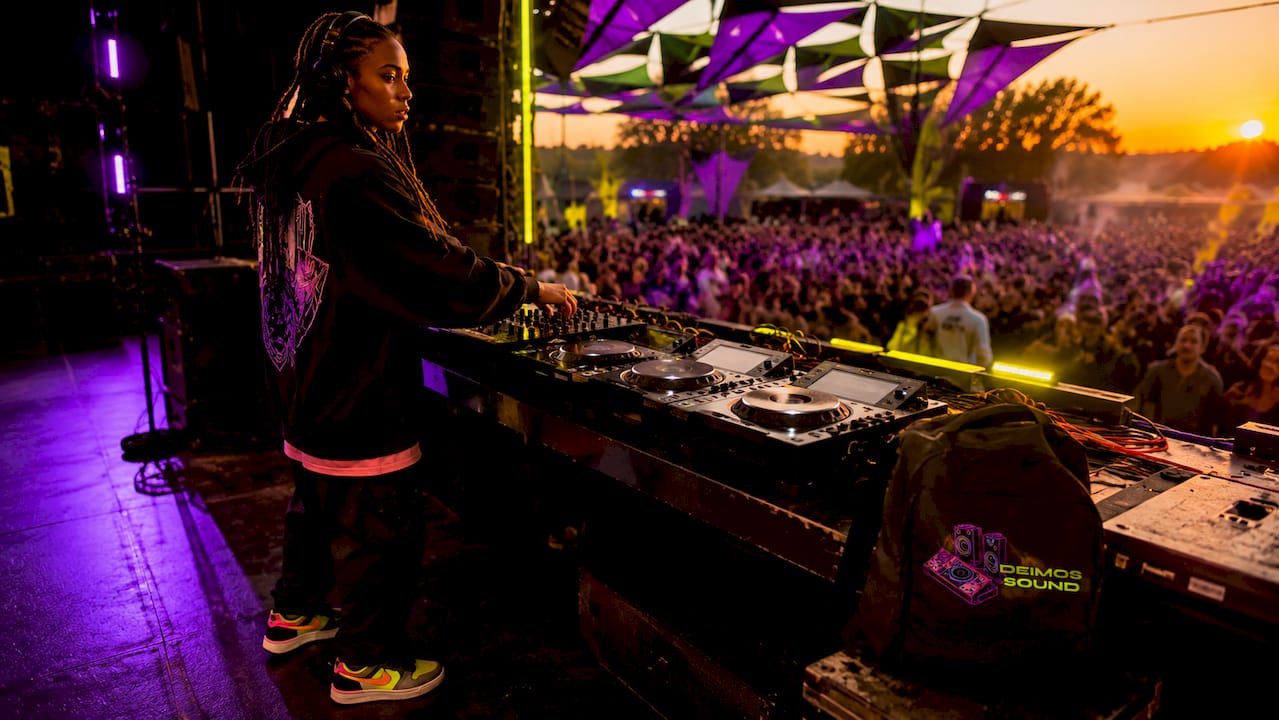
Crowd reading is the DJ's most underrated skill. A skilled DJ watches the floor constantly, adjusting music dynamically to maintain engagement and mood balance throughout the event. When energy dips during a cocktail hour, they drop the tempo and let conversation breathe. When the dance floor fills, they push the BPM and layer in tracks that reward the crowd's momentum.
The signs a professional DJ reads include:
- Body language: Are guests moving toward the floor or retreating to the bar?
- Conversation volume: A louder room often signals the music can push harder.
- Floor density: A thinning dance floor is a cue to shift genre or energy level.
- Age and demographic mix: A diverse crowd needs genre bridges, not jarring jumps.
- Response to drops: Strong reactions confirm the DJ is in sync with the room.
This real-time feedback loop is what separates a live DJ performance from a Spotify playlist. A playlist cannot see the room. A professional DJ can.
Pro Tip: Watch for the moment guests start singing along or raising their hands. That is the signal to hold the energy steady and let the track play out fully rather than cutting early.
What technical skills and equipment distinguish professional DJs from amateurs?
Technical mastery is the backbone of a professional DJ's performance. Beat matching, mixing, and transitions are the foundational skills, but the gap between amateur and professional setups goes much deeper than gear alone.
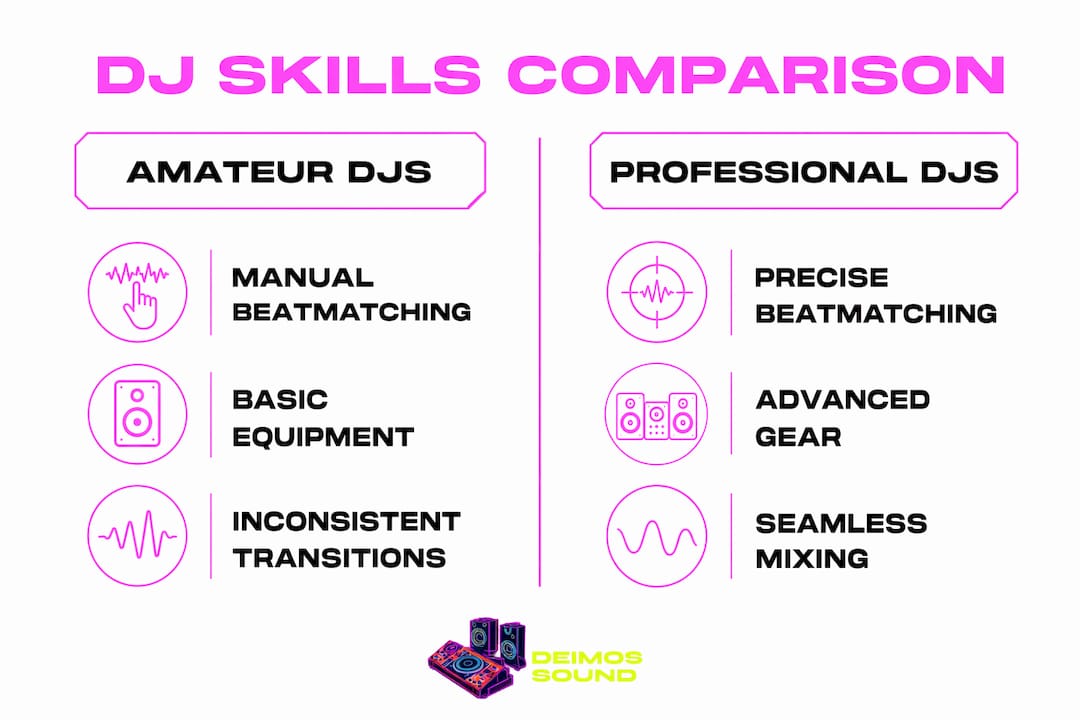
| Feature | Amateur Setup | Professional DJ System |
|---|---|---|
| Beat matching | Manual, often off-tempo | Precise, using beat grids and waveform analysis |
| Transitions | Abrupt or jarring | Smooth, timed to musical phrases |
| Equipment | Consumer-grade speakers | Professional PA systems with dedicated subwoofers |
| Lighting | Sound-activated, reactive | Programmed, beat-synced, fixture-grouped |
| Backup gear | Rarely available | Standard practice for reliability |
| Music library | Limited, personal collection | Curated, genre-spanning, regularly updated |
Professional DJs blend diverse genres and make seamless transitions to avoid the awkward silences that plague amateur sets. That blending keeps guests of all ages and preferences feeling included and keeps the dance floor lively throughout the night.
The integration of lighting sync through beat grid technology takes the experience further. Beat grid synchronization between a DJ controller and lighting software creates clean transitions and immersive event flow. The result is a performance where sound and light move as one coherent narrative rather than two separate elements running in parallel.
Pro Tip: Ask your DJ about their backup equipment plan before booking. A professional always carries redundant gear. An amateur rarely does. That single question reveals a great deal about their experience level.
How do professional DJs create emotional momentum at events?
Emotional timing is the professional DJ's most powerful tool. Professional DJs create emotional memory faster than almost any other event element by curating a musical journey with precise timing. The arc of a great set mirrors the arc of a great story: a slow build, rising action, a peak, and a satisfying resolution.
"The key to an unforgettable event is the professional DJ's ability to curate a musical journey that dynamically shifts emotional memory and crowd interaction." — Why Music Still Controls the Entire Mood of an Event
This emotional architecture shows up in practical choices:
- Opening sets use familiar, welcoming tracks to ease guests into the space.
- Mid-event pacing balances high-energy peaks with deliberate cool-down moments.
- Genre blending connects different audience segments without breaking the mood.
- Drop timing uses musical tension and release to generate shared physical responses.
Professional DJs manage volume, tempo, and energy to influence atmosphere, facilitating conversation during slower moments and peak dancing later in the night. This dynamic control is what keeps guests comfortable and excited across the full arc of an event, not just during the obvious highlights.
The emotional impact of music on memory is well established in neuroscience. A DJ who understands musical phrasing, the relationship between sub-bass lines and physical sensation, and the psychology of anticipation can shape how guests remember an entire evening. That is a skill set built over years of live performance, not something a playlist algorithm replicates.
Why is syncing DJ lighting and sound essential for events?
Lighting synchronization is not a cosmetic add-on. It is a core component of the professional DJ event experience. Syncing DJ lights with music requires structured control beyond simple sound activation for premium, immersive experiences. Sound-activated lights react to volume. Programmed lights respond to musical intent.
The difference in practice is significant:
- Sound-activated lights flash on every beat indiscriminately, creating visual noise rather than atmosphere.
- Programmed lighting scenes align with musical phrases, drops, and transitions, reinforcing the emotional arc of the set.
- Fixture grouping assigns roles to different lights: washes for ambient color, moving heads for dynamic focus, strobes for peak moments.
- Contrast control uses darkness deliberately, making bright moments hit harder by comparison.
Lighting effects are strongest when layered, timed, and contrast-controlled, not just bright or reactive bursts. A well-designed lighting setup creates atmosphere, depth, and visual storytelling that complements the DJ's music flow rather than competing with it. For event organizers, this is the difference between a room that looks like a party and a room that feels like one.
Deimos Sound integrates lighting and sound as a unified performance system, not two separate rentals bolted together. That integration is a defining reason why DJ-lighting sync elevates events beyond what either element achieves alone.
What makes hiring a professional DJ critical for event reliability?
Reliability is the professional DJ's least glamorous quality and one of the most valuable. Professional DJs act as event stewards, managing unexpected issues, whether technical or schedule-related, to maintain mood and flow. Clients consistently underestimate this role until something goes wrong.
A professional DJ's reliability checklist includes:
- Pre-event consultation: Confirming music preferences, event timeline, and venue acoustics in advance.
- Coordination with planners: Professional DJs coordinate closely with event planners and AV teams to align volume levels and timing with the event agenda.
- Equipment redundancy: Backup controllers, cables, and audio interfaces are standard, not optional.
- Crisis management: A power interruption, a late speaker, or a sudden schedule change does not derail a professional. It derails an amateur.
- Professional conduct: Dress code, communication, and on-site behavior reflect directly on the event host.
The contrast with amateur setups is stark. Awkward silences, clipped transitions, and volume mismanagement are not minor inconveniences. They break the emotional momentum that took an hour to build. Years of experience and deep knowledge distinguish professional DJs from amateurs in their ability to maintain crowd interest from start to end.
Pro Tip: Request a setlist consultation and a venue walkthrough before the event. A professional DJ will welcome both. That preparation is what separates a smooth night from a stressful one.
Key takeaways
A professional DJ transforms events by combining crowd reading, emotional timing, and technical execution into a single, cohesive live performance that no playlist can replicate.
| Point | Details |
|---|---|
| Crowd reading drives engagement | DJs adjust music in real time based on floor energy, demographics, and guest response. |
| Emotional timing shapes memory | Musical pacing and genre blending create an arc that guests remember long after the event. |
| Technical mastery prevents failure | Beat matching, backup gear, and smooth transitions keep the event flowing without interruption. |
| Lighting sync multiplies impact | Programmed, beat-synced lighting deepens atmosphere far beyond sound-activated alternatives. |
| Reliability protects your event | Professional DJs manage crises, coordinate with planners, and maintain momentum under pressure. |
The part most event organizers miss
Most event organizers focus on the DJ's music library when they should be evaluating their listening skills. The best sets I have witnessed were not built on the biggest track catalog. They were built on the DJ's ability to hear what the room needed twenty minutes before the room knew it needed it.
There is a common misconception that a professional DJ is simply a more expensive version of a playlist. That framing misses the entire point. A playlist is a fixed sequence. A DJ is a live decision-maker who responds to human behavior in real time. The difference shows up most clearly at the moments when things do not go to plan: a delayed dinner service, a crowd that arrives quieter than expected, a venue with difficult acoustics. A professional absorbs those variables and adjusts. A playlist does not.
The other thing clients consistently overlook is the value of the pre-event consultation. That conversation is where a professional DJ earns their fee before they ever touch a controller. They ask about the guest demographic, the event timeline, the host's non-negotiables, and the venue layout. That information shapes every decision they make on the night. Skipping it is the single biggest mistake event organizers make when hiring for music.
— Otterpop
Deimos Sound: professional DJ services built for your event
Deimos Sound specializes in high-energy DJ sound and lighting services, combining expert music selection with fully integrated audio-visual performance for events of every scale.
Every Deimos Sound engagement starts with a tailored consultation, covering music preferences, venue acoustics, and event flow before a single track is queued. The result is a night where sound and lighting work as one, the crowd stays engaged, and the host stays confident. With professional DJ services starting at $75 per hour, Deimos Sound delivers exceptional value without compromising on quality, gear, or execution. For event organizers who want a memorable experience backed by real expertise, Deimos Sound is the clear choice.
FAQ
What does a professional DJ do that a playlist cannot?
A professional DJ reads the crowd in real time and adjusts music dynamically to maintain energy and mood. A playlist follows a fixed sequence regardless of how the room responds.
How does DJ lighting sync improve an event?
Beat-synced lighting aligns visual effects with musical phrases and drops, creating a unified atmosphere. Sound-activated lights only react to volume and produce visual noise rather than intentional storytelling.
What equipment does a professional DJ use?
Professional DJs use PA systems with dedicated subwoofers, DJ controllers with beat grid software, and programmed lighting rigs. They also carry backup gear as standard practice to prevent technical failures mid-event.
Why does emotional timing matter at events?
Emotional timing controls the arc of the night, building energy toward peak moments and allowing guests to recover between them. This pacing is what makes an event feel memorable rather than flat.
How do I choose a reliable professional DJ?
Ask about their backup equipment, request a pre-event consultation, and confirm they will coordinate directly with your venue or AV team. A professional DJ welcomes all three without hesitation.