
DJ sound differs from recorded music because live performances are dynamic, real-time events shaped by room acoustics, crowd density, sound system characteristics, and in-the-moment mixing decisions that no studio recording can replicate. Where a recorded track is a fixed, polished product mastered for consistent playback on consumer speakers, a live DJ set breathes and shifts with every variable in the room. Software like Serato and Traktor, audio formats like WAV, AIFF, and MP3, and the physical behavior of sub-bass in large venues all contribute to why dj sound differs from recorded music in ways that go far deeper than most listeners realize.
What technical factors make DJ sound different from recorded tracks?
The core technical reason live DJ sound diverges from a studio recording comes down to signal chain, audio format, and volume. A recorded track is delivered to your ears through a controlled, mastered signal. A live DJ set passes through software, a mixer, amplifiers, and a speaker array, each stage adding its own character.
Audio format choices matter more than many producers expect. Lossy files on club systems reveal compression artifacts like smeared transients and damaged low-end that are completely inaudible on consumer gear. Club amplifiers operating above 110 dB expose problems that simply do not exist at bedroom listening volumes. That gap between what sounds fine at home and what falls apart in a club is one of the most misunderstood DJ sound quality differences in the industry.
Human hearing also changes at extreme volumes. Ear sensitivity at high SPLs unmasks audio data gaps and compression artifacts, causing physical fatigue in listeners. This is not a subjective impression. It is a measurable perceptual shift that makes live listening fundamentally different from private playback.
Key technical factors that separate live DJ sound from recorded music include:
- Audio format compression: MP3 files encode audio by discarding data the ear supposedly cannot hear. At club volumes, those gaps become audible.
- Time-stretching and key-lock algorithms: When a DJ adjusts tempo or pitch in Serato or Traktor, the software applies real-time processing that introduces subtle artifacts not present in the original recording.
- Gain staging: Proper gain staging with master peaks around -6 dBFS preserves headroom and prevents clipping on professional systems. Poor gain staging is one of the fastest ways to degrade live sound.
- DAW and software summing: DAW summing engines differ very little in actual sound quality. Perceived differences come from plugin choices and processing decisions, not the software itself.
Pro Tip: Set your master output in Serato or Traktor to peak no higher than -6 dBFS. This gives the venue's system control room to manage final loudness without clipping your signal.
How do venue acoustics shape live DJ sound differently than recordings?
A studio recording is designed for a neutral, controlled listening environment. A live DJ set plays into a room that pushes back. Venue acoustics, crowd density, and sound system tuning all actively reshape what you hear, and that reshaping is part of what makes live DJ audio experiences so distinct.
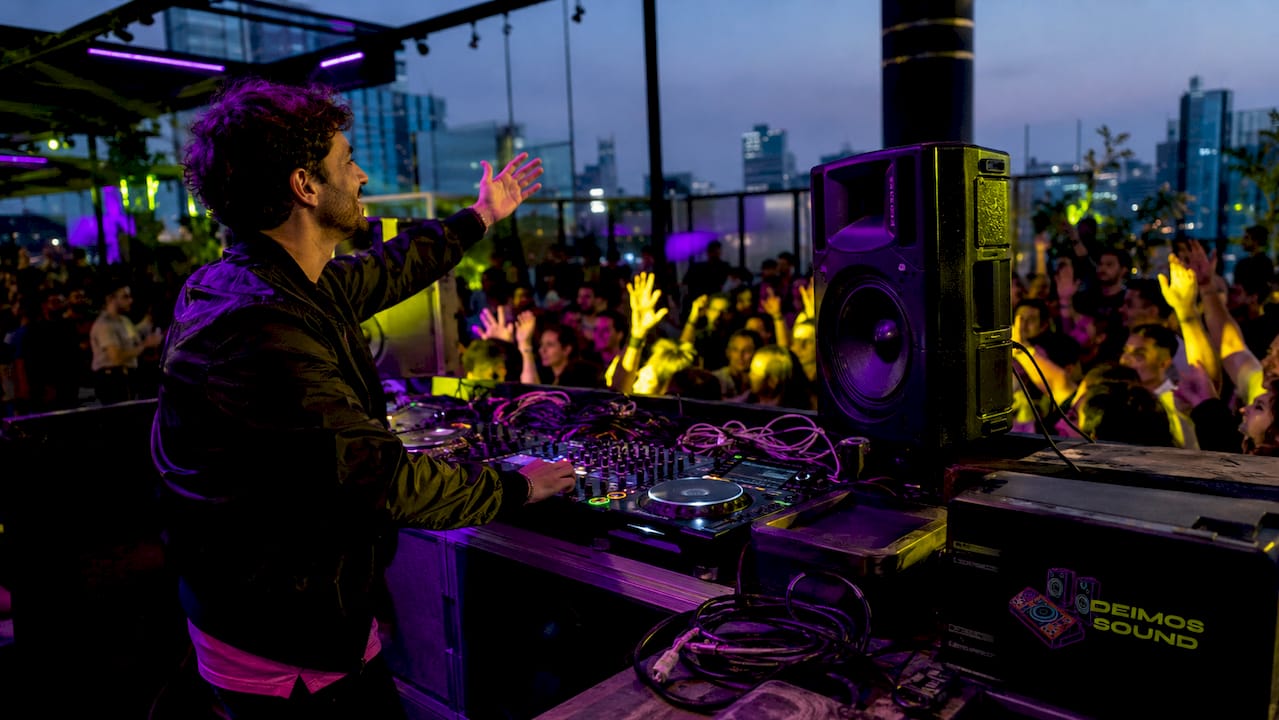
Sub-bass behavior is the clearest example. A track's sub-bass requires physical space to develop fully. What sounds thin and underwhelming on headphones can bloom massively in a venue because the low frequencies need air movement and room volume to reach their full physical impact. A 50 Hz sine wave has a wavelength of roughly 22 feet. Most headphones and studio monitors simply cannot reproduce that physical sensation.
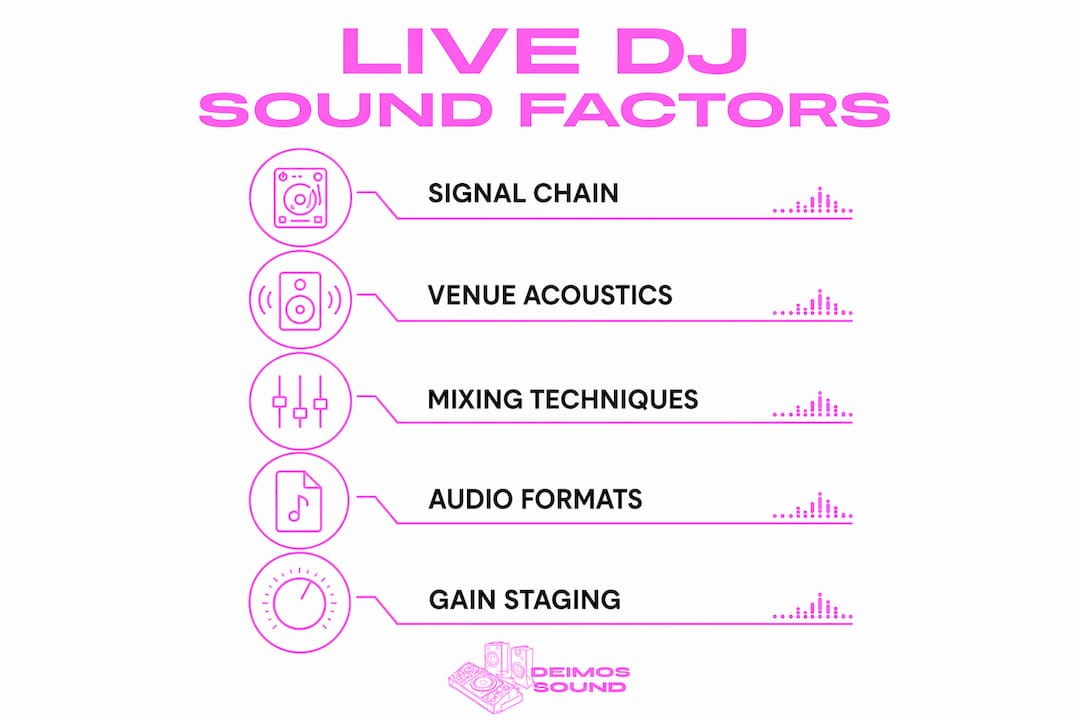
Crowd density adds another layer. A full dancefloor absorbs high-frequency energy differently than an empty room. As the crowd fills in, the room's acoustic character shifts, which is why a DJ's mix that sounded bright and clear during soundcheck can feel warmer and more enveloping by midnight. Physical impact depends more on venue acoustics and sound system tuning than on digital bitrate alone.
The four environmental factors that most influence live DJ sound are:
- Room size and geometry: Larger rooms allow low frequencies to develop and spread. Parallel walls create standing waves that boost or cancel specific frequencies.
- Crowd density: Bodies absorb high-frequency sound, softening the top end and making the mix feel fuller as the room fills.
- Sound system tuning: A well-tuned line array in a 500-person venue sounds radically different from a poorly placed cluster system in a room of the same size.
- Reflective surfaces: Hard floors, glass walls, and low ceilings create reflections that add perceived energy but can also muddy transients and smear stereo imaging.
Understanding how room size affects sound is one of the most practical skills a sound engineer or producer can develop for live work.
How do live mixing techniques create unique sound characteristics?
Live DJ mixing is irreversible and non-repeatable. That is its defining characteristic and the source of its unique sound. A studio mix is edited, corrected, and optimized after the fact. A live set happens once, in real time, in front of an audience that is actively shaping the DJ's decisions.
Live DJ sets involve real-time, irreversible performances shaped by audience feedback and environmental factors. A DJ reading a crowd will drop the energy, extend a breakdown, or cut to a harder track based on what the room is telling them. That responsiveness is something a pre-recorded mix structurally cannot do.
The specific techniques that alter sound in live performance include:
- Real-time EQ adjustments: DJs cut low frequencies on outgoing tracks and boost them on incoming ones to create smooth transitions. This constant EQ movement means the frequency balance of the mix is always in flux, unlike a mastered recording.
- Effects processing: Reverb throws, filter sweeps, and echo effects applied live add spatial and textural elements that were never part of the original track's production.
- Gain riding: A skilled DJ adjusts gain between tracks to compensate for differences in mastering loudness. This prevents jarring volume jumps but also means every track is heard at a slightly different level than its studio master intended.
- Sampling and remixing on the fly: DJs using controllers like the Pioneer CDJ-3000 or Native Instruments Maschine can layer samples and loops over existing tracks, creating hybrid sounds that exist only in that performance.
The differences in DJ performances come not just from the tracks themselves but from the constant, skilled manipulation happening between them.
How do audio file choices affect live DJ sound quality?
File format is one of the most debated topics in DJ sound engineering, and the reality is more nuanced than the format wars suggest. The audible difference between a 320 kbps MP3 and a lossless file is frequently imperceptible in club environments because volume and acoustics mask subtle artifacts. Blind tests show even experienced DJs rarely distinguish between these formats in typical live settings.
That said, format still matters in specific contexts. Here is how the main formats compare for live DJ use:
| Format | Compression | Metadata support | Best use case |
|---|---|---|---|
| MP3 320 kbps | Lossy | Limited | Portable sets, lower-stakes gigs |
| WAV | Lossless | Poor | High-quality playback, limited tagging |
| AIFF | Lossless | Excellent | Live DJ performance, full metadata |
| FLAC | Lossless | Good | Storage and archiving |
AIFF is preferred over WAV in live DJ settings because it supports comprehensive metadata with better consistency across software and hardware players. That metadata support means track names, BPM, and cue points display reliably on Pioneer CDJs and in Serato or Traktor, which matters when you are managing hundreds of tracks under pressure.
One risk that receives too little attention is fake lossless audio. Lossy files converted into WAV or AIFF containers take up more storage space without offering any true quality improvement. DJs should verify spectral data using tools like Spek or Adobe Audition to confirm a file is genuinely lossless before trusting it in a live set. Relying on a fake lossless file in a high-stakes performance is a real risk, and one that is entirely avoidable.
Pro Tip: Use Spek or a similar spectrum analyzer to check your audio files before adding them to your live library. A genuine lossless file shows full frequency content up to 22 kHz. A fake lossless file shows a hard cutoff at the lossy format's original encoding ceiling.
Reviewing a solid party DJ equipment essentials list alongside your file format decisions will help you build a live setup where every component supports the others.
Key Takeaways
Live DJ sound differs from recorded music because real-time mixing, venue acoustics, audio format choices, and gain staging all combine to create an experience that no static studio recording can reproduce.
| Point | Details |
|---|---|
| Venue acoustics reshape sound | Sub-bass blooms in physical space; crowd density and room geometry change what you hear. |
| High volume reveals format flaws | Club systems above 110 dB expose MP3 compression artifacts inaudible on consumer gear. |
| Live mixing is irreversible | Real-time EQ, effects, and gain adjustments create a mix that exists only once. |
| AIFF beats WAV for live use | AIFF's metadata support makes it more reliable than WAV across DJ hardware and software. |
| Gain staging is the priority | Master peaks at -6 dBFS preserve headroom and prevent clipping on professional systems. |
What I've learned about live sound that most producers overlook
After spending years around DJ booths and sound systems of every size, the single biggest misconception I keep encountering is that audio format is the primary variable separating great live sound from mediocre live sound. Producers obsess over WAV versus AIFF versus FLAC while ignoring the far more impactful variables: how the room is tuned, how the system is configured, and how the DJ manages gain from track to track.
The truth is that DJ software maintains signal integrity rather than improving or degrading it. Configuration and gain staging are the real sound quality factors. A perfectly mastered AIFF file played through a poorly gain-staged signal chain into an untuned system will sound worse than a 320 kbps MP3 played correctly through a well-configured rig. That is not a theoretical claim. Anyone who has worked a real booth knows it.
What I find genuinely exciting about live DJ sound is that its imperfection is part of its power. The real-time adaptation, the crowd interaction, the physical bloom of sub-bass in a room full of people, these are not bugs in the system. They are the system. A studio recording captures a moment. A live DJ set creates one. Understanding that distinction is what separates engineers who can make a room feel alive from those who are just playing back files.
— Otterpop
Bring professional sound to your next event with Deimos Sound
Understanding why DJ sound differs from recorded music is one thing. Experiencing it through a properly designed, expertly operated system is another entirely.
Deimos Sound delivers professional event audio with tailored setups built around your venue's specific acoustic properties, crowd size, and event goals. Every setup is configured for proper gain staging, clean signal chains, and sound system tuning that lets the music perform the way it was meant to. With rates starting at $75 per hour, Deimos Sound brings the kind of live audio quality that makes the difference between a good event and one people talk about for weeks.
FAQ
Why does DJ music sound louder and more physical than recorded music at home?
Club sound systems operate above 110 dB and move enough air to create physical sensations, especially in the sub-bass range. Consumer speakers and headphones cannot reproduce that physical impact regardless of audio quality.
Is AIFF better than WAV for live DJ performances?
AIFF is generally preferred over WAV for live DJ use because it supports comprehensive metadata, which displays track information reliably across Pioneer CDJs, Serato, and Traktor.
Does DJ software like Serato or Traktor degrade audio quality?
DJ software generally maintains signal integrity rather than degrading it. The primary sound quality factors in a live set are gain staging, audio file quality, and sound system configuration.
What is fake lossless audio and why does it matter for DJs?
Fake lossless audio is a lossy file, such as an MP3, converted into a WAV or AIFF container. It takes up more storage space but delivers no quality improvement, and can mislead DJs into trusting files that will underperform on club systems.
How does crowd density affect live DJ sound?
A full dancefloor absorbs high-frequency energy, softening the top end of the mix and making the overall sound feel warmer and fuller compared to an empty room during soundcheck.