
The event DJ consultation process is a structured pre-booking meeting where you and a DJ align on music, logistics, and event flow before signing any contract. Industry practice treats this meeting as mandatory. A thorough consultation typically runs 30–60 minutes and covers everything from your event timeline to backup equipment plans. Skipping it is the single fastest way to end up with a DJ who plays the wrong music at the wrong moment. Whether you are planning a wedding reception, a corporate gala, or a private party, this meeting sets the foundation for the entire audio experience.
What is the event DJ consultation process?
The event DJ consultation process is the industry term for what many planners informally call a "party DJ consultation." It is not a sales call. It is a working session where both sides exchange the specific details that determine whether the event succeeds or falls flat. Pre-event consultations ensure music and event flow alignment well beyond a simple song list. That distinction matters because a DJ who only receives a playlist has no context for reading the room when the crowd stops dancing.
The meeting format varies. Some DJs prefer an in-person walkthrough at the venue. Others conduct video calls through Zoom or Google Meet, which works well for destination events. Phone consultations are common for smaller parties where logistics are straightforward. The format is less important than the depth of the conversation.
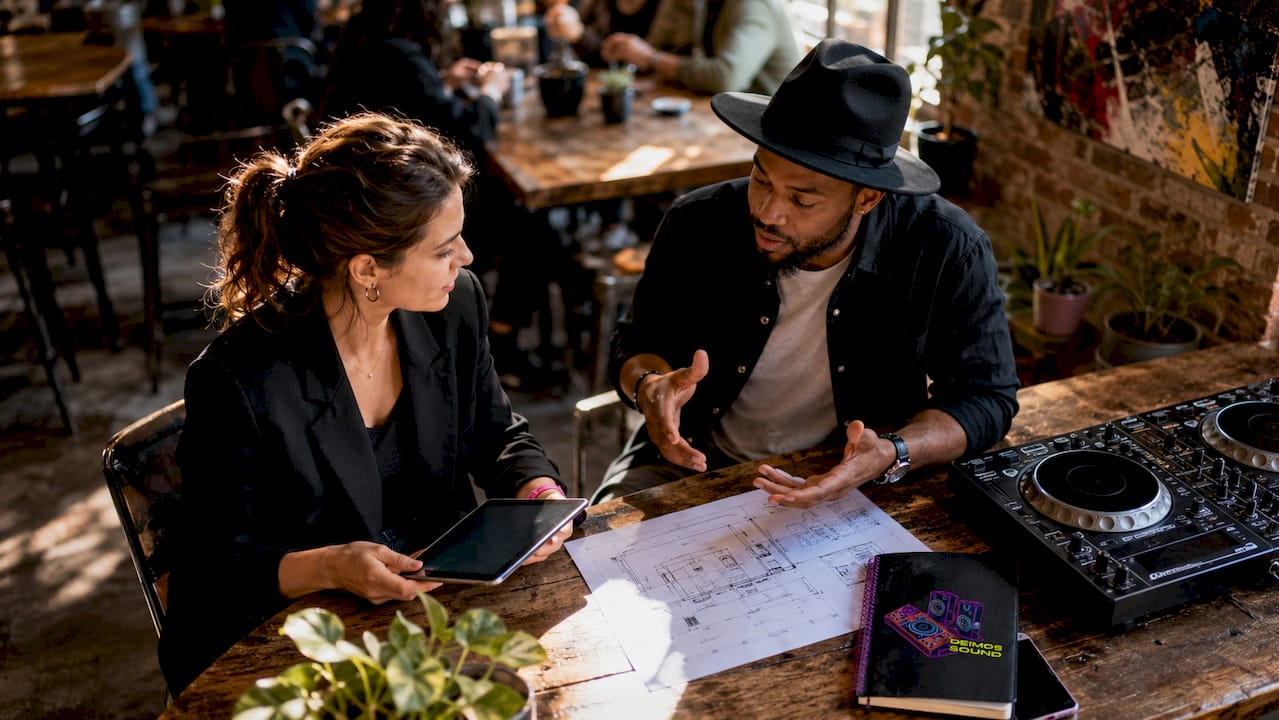
Professional DJs treat the consultation as a two-way interview. You are evaluating them just as much as they are gathering your preferences. A DJ who dominates the conversation without asking questions about your guests, your venue, or your vision is showing you exactly how the event night will go.
What typically happens during a DJ consultation?
A well-run consultation covers five core areas. Each one directly affects how the event sounds and feels from the first guest arrival to the final song.
Timeline and key moments. You and the DJ map out the full event schedule, including ceremony start, cocktail hour, dinner, first dance, speeches, and last song. This prevents dead air during transitions and ensures the music shifts in tone at the right moments.
Music preferences. Effective consultations cover must-play tracks, do-not-play lists, and genre preferences for each phase of the event. A do-not-play list is just as important as a must-play list. One wrong song during a family dinner can derail the mood entirely.
Equipment and venue logistics. The DJ needs to know the venue's power supply, load-in access, stage dimensions, and any noise restrictions. You need to know what gear they are bringing and whether it fits the space. Reviewing DJ equipment essentials before the meeting helps you ask sharper questions.
Vendor coordination. A professional DJ communicates directly with your caterer, venue manager, and photographer to synchronize timing. Speeches, cake cutting, and first dances all require coordination across multiple vendors.
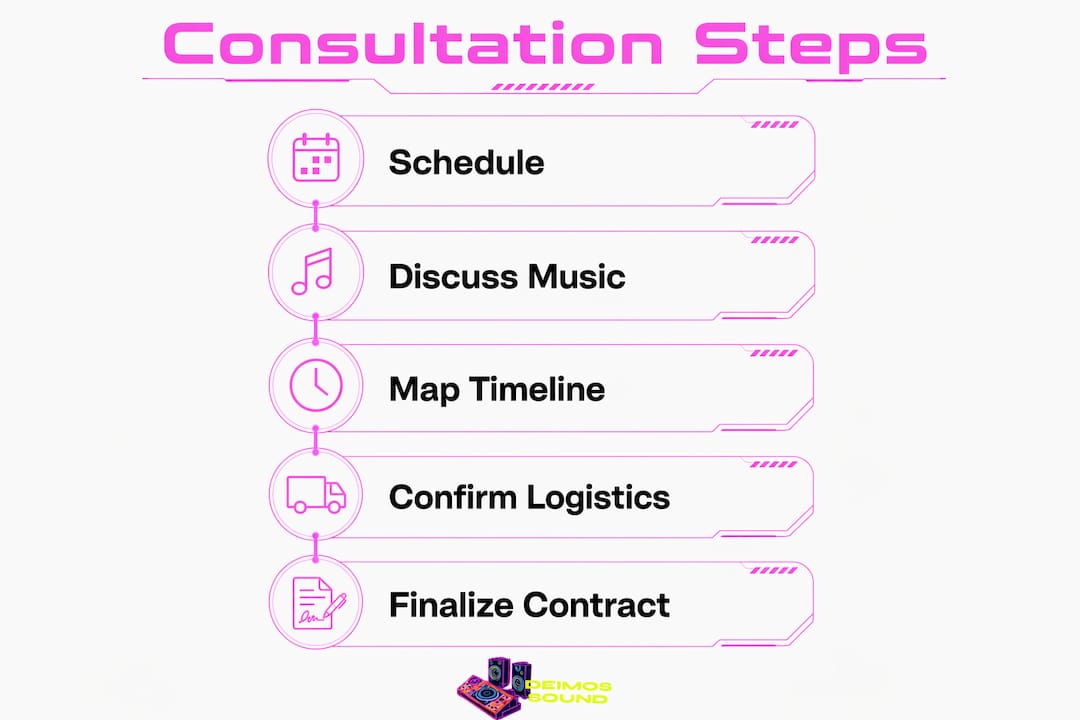
Contract details. A written contract must specify the performance date, venue, hours, payment schedule, cancellation terms, and playlist agreements. Any DJ who resists putting these details in writing is not worth booking.
How do you evaluate a DJ's reliability during consultation?
Reliability is harder to assess than music taste, but it is more important. A DJ with great song selection who shows up late or loses a laptop the night before the event will ruin your gathering. The consultation is where you test for reliability before it costs you anything.
Watch for these specific indicators during the meeting:
- Response time before the consultation. If a DJ took three days to reply to your initial inquiry, that pattern will repeat when you need a last-minute change.
- Designated contact clarity. Ask who your point of contact will be from booking through event day. Vague answers signal disorganized operations.
- Contingency plans. Professional DJs carry duplicate equipment, including backup speakers, mixers, and laptops, and they name a substitute DJ in case of illness. A DJ without a backup plan is a liability.
- Venue familiarity. A DJ who has worked your venue before knows its acoustic quirks, load-in restrictions, and staff expectations. That experience reduces day-of surprises.
- Enthusiasm and listening balance. A prepared DJ asks specific questions about your guests and event atmosphere. One who talks only about their own credits is not focused on your event.
Pro Tip: Ask the DJ directly: "What happens if you get sick the night before?" A confident, specific answer with a named substitute DJ is the only acceptable response.
Understanding why DJ reliability matters goes beyond equipment. Communication style during the consultation predicts how the DJ will handle pressure on event day. A DJ who builds rapport and understands your vision during the meeting is far more likely to read the room correctly when it counts.
How should you evaluate a DJ demo and live samples?
Demo mixes are the most misunderstood part of the DJ hiring process. Most planners treat a polished demo as proof of skill. It is not. Pre-recorded demos reflect controlled, pre-planned environments and are unreliable alone for vetting a DJ's live performance ability. A studio mix can be edited, layered, and perfected over hours. A live event gives the DJ no such luxury.
| Evaluation Method | What It Shows | Reliability |
|---|---|---|
| Pre-recorded demo mix | Technical mixing ability in ideal conditions | Low for live performance |
| Unedited live event footage | Crowd reading, transitions, real-time decisions | High |
| Client references from similar events | Consistency across different event types | High |
| Live performance observation | Full skill set in real conditions | Highest |
Unedited footage from live events is the gold standard. Watch specifically for how the DJ handles the first 10 minutes of a set, how they manage speech-to-music transitions, and what they do when a song clears the dance floor. Those moments reveal adaptability, which no demo mix can fake.
Pro Tip: Ask every DJ you consult: "What do you do when a song isn't getting people dancing?" A DJ with a clear, practiced answer has solved that problem before. A vague answer means they haven't.
A DJ's strategy for handling an unresponsive audience is one of the clearest measures of their professionalism. Crowd management is a skill separate from music knowledge, and the consultation is your best chance to test for it.
How to prepare effectively for your DJ consultation
Preparation determines how much value you extract from the meeting. A planner who arrives with a clear agenda gets specific answers. One who arrives unprepared gets a sales presentation.
- Build your question list in advance. Cover music preferences, logistics, contracts, and contingency plans. Group questions by category so the conversation stays focused.
- Research multiple DJs before committing. Consult at least two or three candidates. Comparison reveals what is standard practice versus what is exceptional service.
- Know your event timeline. Arrive with a draft schedule showing start times, key moments, and end time. The DJ cannot plan around a timeline you haven't built yet.
- Review the contract template before signing. Ask for the contract before the consultation ends. Read every clause covering cancellation, overtime rates, and equipment failure.
- Use any planning tools the DJ offers. Many professional DJs provide online questionnaires or planning worksheets before the meeting. Completing these in advance shortens the consultation and deepens the conversation.
- Schedule follow-up meetings. Many DJs offer follow-up consultations to finalize the running order, confirm the first dance, and accommodate last-minute changes. Build these into your planning calendar.
A party DJ checklist for the consultation should include: event date and venue, guest count and age range, preferred genres and specific tracks, do-not-play list, timeline with key moments, budget and package details, and contract review notes. Arriving with this list transforms a 60-minute meeting into a productive planning session rather than a general introduction.
Key takeaways
The DJ consultation process is the single most important step in the event DJ hiring process, and treating it as a formal audition rather than a casual chat determines whether your event succeeds.
| Point | Details |
|---|---|
| Consultation is mandatory | Book only after a 30–60 minute structured meeting covering timeline, music, and logistics. |
| Demos are not enough | Request unedited live event footage to assess real crowd reading and adaptability. |
| Reliability signals matter | Ask about backup equipment, named substitutes, and response time before committing. |
| Preparation drives results | Arrive with a full question list, draft timeline, and do-not-play list to maximize the meeting. |
| Written contracts protect you | Confirm that the contract covers date, hours, payment, cancellation, and playlist agreements. |
Why the consultation is really an audition
The most common mistake planners make is treating the DJ consultation as a formality. They listen to a demo, check the price, and book. That approach misses the entire point of the meeting.
Treat the initial consultation as a formal audition focused on crowd management and adaptability, not just the music library. The song catalog is the easy part. Every professional DJ has access to millions of tracks. What separates a great event DJ from an average one is the ability to read 200 people in real time and make decisions in seconds.
The questions that reveal the most are the uncomfortable ones. Ask how they handled the last event where the crowd stopped dancing. Ask what they do when the bride's family and the groom's friends want completely different music. Ask what happened the last time their equipment failed. A DJ who answers these questions with specific stories and clear strategies has earned their fee. One who deflects or gives generic answers has not.
Building rapport during the consultation also predicts event fit in a way that no demo can. You are going to trust this person with the atmosphere of one of your most important events. If the conversation feels forced or one-sided, that dynamic will not improve on event day. The consultation is your clearest window into how the DJ operates under normal conditions. Use it fully.
— Otterpop
Deimos Sound's approach to the DJ consultation
Deimos Sound builds every event around a detailed consultation that covers music preferences, event timeline, lighting coordination, and contingency planning from the first meeting. Every DJ on the Deimos Sound roster carries backup equipment and a named substitute, so planners never face a last-minute crisis without a solution already in place.
Rates start at $75 per hour, making professional consultation and full event coverage accessible for gatherings of every size. Deimos Sound assigns a dedicated planner contact from booking through event day, so your questions always reach the right person fast. If you are ready to move from planning to booking, schedule your consultation with Deimos Sound and experience what a thorough pre-event process actually looks like in practice.
FAQ
What is a party DJ consultation?
A party DJ consultation is a structured pre-booking meeting where you discuss your event timeline, music preferences, and logistics with a DJ before signing a contract. It typically runs 30–60 minutes and is mandatory with professional DJ services.
What should I bring to a DJ consultation?
Bring a draft event timeline, your must-play and do-not-play lists, your venue details, and a list of questions covering music, contracts, and contingency plans. Arriving prepared shortens the meeting and produces more specific commitments from the DJ.
How do I evaluate a DJ demo during event planning?
Request unedited live event footage rather than relying on pre-recorded demo mixes. Live footage shows how the DJ reads a crowd and handles real-time transitions, which a polished studio mix cannot demonstrate.
What questions should I ask a DJ about reliability?
Ask about backup equipment, named substitute DJs, and their process for handling equipment failure. A professional DJ carries duplicate speakers, mixers, and laptops, and can name a specific substitute in case of illness.
How many DJ consultations should I schedule before booking?
Consult at least two or three DJs before making a decision. Comparing responses to the same questions reveals which candidates have genuine event experience and which are offering generic answers.