
An EDM DJ set is defined as a live performance where a DJ blends electronic music tracks continuously using specialized equipment, structured techniques, and a planned energy arc. Understanding what does an EDM DJ set include helps event planners and music enthusiasts make smarter decisions about booking, budgeting, and setting expectations. The core components are DJ controllers or CDJs, a mixer, headphones, and DJ software, combined with techniques like beatmatching, phrase matching, and EQing. Set lengths range from tight 60-minute club slots to multi-hour festival performances, each demanding a different level of preparation and track depth.
What does an EDM DJ set include at its core?
An EDM DJ set is built on three pillars: hardware, software, and technique. Strip away the lights and the crowd, and you are left with a DJ making real-time decisions about which track plays next, how it blends with the current one, and what effect that transition has on the room. The industry term for this continuous blending practice is "live mixing," and it separates a DJ set from a simple playlist. Every element of the setup serves that single goal: keeping the music moving without a gap.
The emotional narrative of a set matters more to audiences than technical perfection. Audiences respond to energy arcs and emotional storytelling far more than they notice a flawless beatmatch. That insight shapes every decision a skilled DJ makes, from track selection to the timing of a drop.
What equipment does an EDM DJ use?
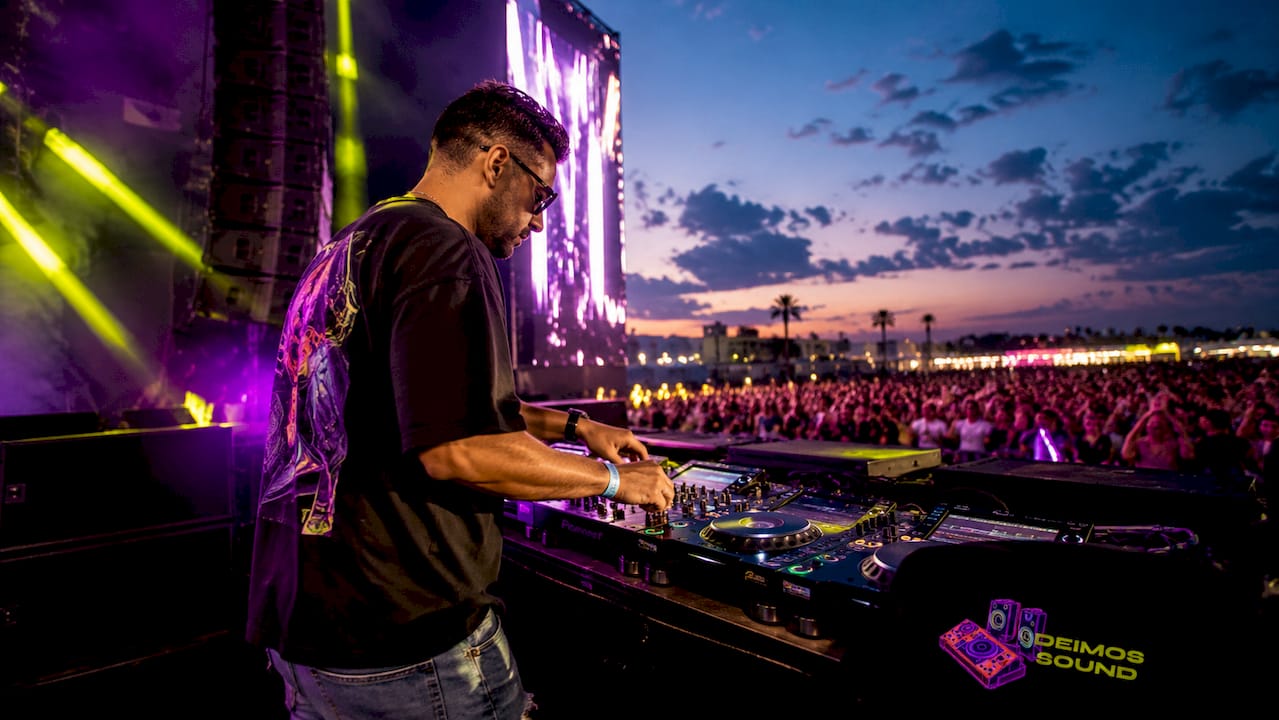
The backbone of any EDM DJ set is the hardware and software working together. Each piece has a specific role, and understanding those roles helps event planners ask the right questions when hiring.
- DJ controllers or CDJs: Controllers are all-in-one units that combine jog wheels, faders, and pads. CDJs (Compact Disc Jockeys, now used with USB drives) are the club and festival standard. Both connect to a mixer to blend two or more audio channels. Hardware setup links the controller or CDJs to the mixer, with DJ software handling track analysis and effects integration.
- Mixer: The mixer is the central hub. It controls volume levels, EQ bands (bass, mid, treble), and crossfading between tracks. A two-channel mixer suits most club sets; four-channel mixers give DJs more creative freedom.
- Headphones: Headphones are critical for cueing the next track privately before it plays through the speakers. Without them, a DJ cannot preview a transition without the crowd hearing a mistake.
- DJ software: Programs like Serato DJ Pro and rekordbox analyze track tempo (BPM) and key, organize music libraries, and integrate effects. Software also displays waveforms, making it easier to spot drops and breakdowns visually.
- Effects units: Reverb, filters, flangers, and loop functions add texture to transitions. A well-placed filter sweep can make a crowd hold its breath before a drop.
Pro Tip: Organize your music library by BPM range and key before any event. A well-tagged library cuts decision time in half during a live set and reduces the chance of a clumsy transition.
Experienced DJs also use color-coded hardware cues to manage complex live mixes under pressure. This system prevents mistakes and supports quick navigation through large track collections, especially during fast-paced festival sets.
How do DJs mix tracks in an EDM set?
Mixing technique is what separates a DJ from someone who presses play on a playlist. The features of DJ performances in the EDM world rely on a specific set of skills applied in real time.
- Beatmatching: The DJ aligns the BPM of the incoming track with the outgoing track so the beats land together. Modern software assists with this, but skilled DJs refine it manually using the jog wheel.
- Phrase matching: EDM tracks are built in 8-bar or 16-bar phrases. Phrase matching means starting the mix at the beginning of a phrase so the musical structure of both tracks aligns. Ignoring phrase structure produces a chaotic, jarring blend.
- EQ adjustments and gain staging: The DJ cuts the bass on the incoming track while the outgoing track still plays, then gradually swaps them. This prevents bass frequencies from clashing and muddying the sound.
- Harmonic mixing: Tracks in compatible musical keys blend more naturally. The Camelot Wheel is the standard reference system DJs use to identify key-compatible tracks. Moving one step around the wheel produces a smooth tonal shift; jumping across it creates tension.
- Live effects: Reverb tails, filter sweeps, and echo throws mask transition points and add drama. A reverb throw on the last vocal of a track, for example, creates a natural fade into the next intro.
- Reading the crowd: The most crucial DJ skill is reading the dance floor to balance technical mixing with crowd engagement. Knowing when to maintain, raise, or drop energy keeps the audience connected.
Pro Tip: If a transition feels forced, use a filter sweep or reverb throw to create a moment of texture. The crowd hears the effect, not the seam.
How do EDM DJs structure setlists and energy flow?
Set structure is where preparation meets artistry. A well-built EDM set follows a clear energy arc, and understanding that arc helps event planners align the DJ's performance with the broader event program.
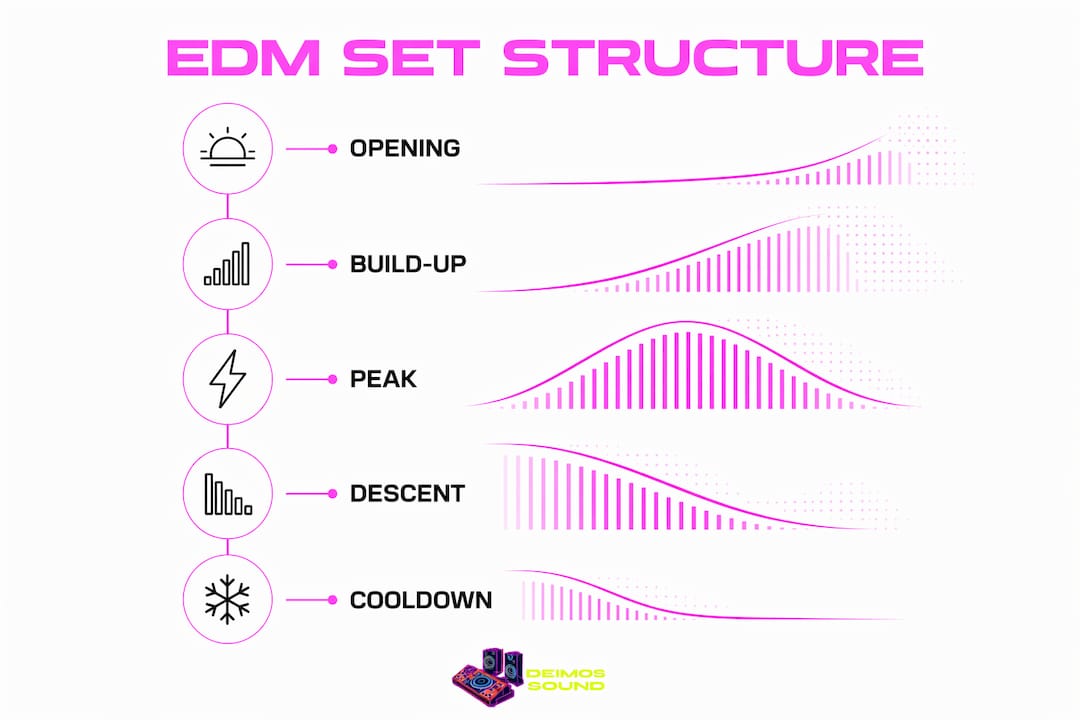
Professional EDM DJ sets follow a clear energy arc with opening, build-up, peak moments, and a controlled descent. The average set contains 3–5 peak tracks placed strategically for maximum audience impact.
| Set phase | Energy level | Purpose |
|---|---|---|
| Opening | Low to medium | Warm up the crowd, establish mood |
| Build-up | Rising | Introduce energy, test the room |
| Peak | High | Deliver the most powerful tracks |
| Cool-down | Descending | Bring the crowd down gracefully |
A 60-minute set typically covers 18–22 tracks, while a 3-hour festival set can reach 55 tracks. Each track plays for roughly 2.5–3.5 minutes before the next mix begins.
One of the most counterintuitive truths in DJ set planning is that constant high energy exhausts a crowd. DJs avoid continuously escalating energy and instead use blocks of consistent energy with breathing room between spikes. This "energy plateau" approach keeps audiences comfortable and engaged for longer.
Skilled DJs also prepare planned emergency exit points within their sets. These are natural musical breaks where a DJ can mix out cleanly if a transition fails or the crowd energy drops unexpectedly. Rather than forcing a blend, the DJ exits during a breakdown and re-enters with a fresh track. This technique is invisible to the audience but saves a set from falling apart.
Pro Tip: Prepare 20–30% more tracks than your set time requires. That buffer gives you the flexibility to read the room and skip tracks that do not fit the moment.
How do DJs prepare for different event types?
The elements of an EDM set shift significantly depending on the event context. A club night, a private wedding reception, and a corporate product launch each demand a different approach, and the best DJs treat pre-event communication as seriously as the performance itself.
- Must-play and do-not-play lists: Pre-event communication about must-play and do-not-play tracks aligns the set with event demographics and schedule requirements. Event planners should share these lists at least one week before the event.
- Audience demographics: A crowd of 25-year-olds at a nightclub responds differently than a mixed-age corporate audience. The DJ adjusts BPM range, genre selection, and lyrical content accordingly.
- Event schedule alignment: A DJ needs to know when dinner ends, when speeches begin, and when the dance floor officially opens. The DJ consultation process covers these logistics so the musical arc matches the event timeline.
- Technical setup coordination: The DJ needs to confirm speaker placement, power supply, stage dimensions, and sound system compatibility with the venue before the event. Surprises at load-in cost time and raise stress levels.
- Festival vs. private event preparation: Festival sets demand a higher track count, more aggressive energy peaks, and faster transitions. Private events often require more genre variety and a softer opening to accommodate guests who are not dedicated dance floor regulars.
Understanding DJ set curation as a craft, rather than a simple playlist, helps event planners appreciate why a good DJ asks so many questions before the event. Those questions produce a better night.
Key Takeaways
A successful EDM DJ set combines the right hardware, practiced mixing technique, a structured energy arc, and thorough pre-event preparation to deliver a continuous, emotionally engaging performance.
| Point | Details |
|---|---|
| Core equipment | CDJs or a controller, a mixer, headphones, and DJ software form the foundation of every set. |
| Essential techniques | Beatmatching, phrase matching, EQ swaps, and harmonic mixing produce clean, professional transitions. |
| Energy arc structure | Sets move through opening, build-up, peak, and cool-down phases to keep crowds engaged without exhaustion. |
| Track preparation | Prepare 20–30% more tracks than the set requires to allow real-time crowd reading and flexibility. |
| Pre-event communication | Share must-play and do-not-play lists with your DJ at least one week before the event. |
What actually makes an EDM set memorable
The biggest mistake I see event planners make is judging a DJ by their track list alone. A great track list played without crowd awareness produces a flat night. The real live aspect of an EDM DJ set lies in continuous crowd reading and adapting music choices in real time. That skill cannot be captured in a Spotify playlist.
The "energy trap" is the most common pitfall I have watched DJs fall into. They open strong, keep pushing the energy higher, and by the 45-minute mark the crowd is tired and starting to drift. The plateau approach, where you hold a consistent energy level for several tracks before spiking, is far more effective and far less common than it should be.
Booth stress is also real and underappreciated. A DJ managing a failing CDJ, a monitor that cuts out, and a venue manager asking for a genre change simultaneously is working under genuine pressure. Color-coded cue points and emergency exit mix points are not just tricks. They are the difference between a set that recovers gracefully and one that falls apart publicly.
My advice to event planners: engage your DJ early, share your event timeline in detail, and trust their read of the room once the night begins. The planners who do that consistently report the best outcomes.
— Otterpop
Deimos Sound: professional EDM DJ services for your event
Planning an event and want to know the music will land exactly right? Deimos Sound brings professional EDM DJ performance to clubs, private parties, and corporate events, with every set built around your specific audience and event schedule.
Deimos Sound handles pre-event consultation, must-play list coordination, and full technical setup so you never have to guess whether the sound will work. Every performance uses professional DJ equipment and a structured energy arc tailored to your crowd. Rates start at $75 per hour, making professional quality accessible for events of any size. Visit Deimos Sound to check availability and start planning your event today.
FAQ
What does an EDM DJ set include?
An EDM DJ set includes CDJs or a DJ controller, a mixer, headphones, and DJ software, combined with techniques like beatmatching, EQing, and live effects to blend tracks continuously.
How long is a typical EDM DJ set?
A club set typically runs 60–90 minutes and covers 18–22 tracks. Festival sets can run 2–3 hours and include up to 55 tracks.
What mixing techniques do EDM DJs use?
EDM DJs use beatmatching, phrase matching, EQ swaps, harmonic mixing, and live effects like reverb and filter sweeps to create smooth, energetic transitions between tracks.
How do DJs structure energy in a set?
DJs follow an energy arc with opening, build-up, peak, and cool-down phases. They avoid constant escalation and instead use energy plateaus to keep the crowd engaged without exhausting them.
What should event planners tell a DJ before the event?
Event planners should provide must-play and do-not-play track lists, the event schedule, audience demographics, and venue technical details at least one week before the performance.