
A corporate DJ is defined as a professional who manages the full audio atmosphere of a business event, from music selection and tempo control to technical coordination and live crowd reading. The role of a DJ at corporate events extends well beyond pressing play on a playlist. These professionals shape how guests feel, how energy builds across an evening, and how smoothly each segment of the program flows. For corporate event planners, understanding what a skilled DJ actually does is the difference between a forgettable function and a gathering people talk about for months.
What is the role of a DJ at corporate events?
The DJ's core function at a corporate event is to manage the emotional arc of the room. Event production experts describe DJs as the "heartbeat of the event," managing emotional pacing the way a film score composer shapes a scene. That comparison is precise: just as a film score tells you how to feel before dialogue does, a DJ's music tells guests how to behave before anyone makes an announcement.
A skilled DJ reads the room, adjusts volume and tempo in real time, and coordinates with your event timeline. They support speakers, manage transitions between segments, and fill silence that would otherwise feel awkward. They also operate the sound system, control lighting, and handle microphone handoffs. In short, the DJ is the connective tissue between every part of your event program.
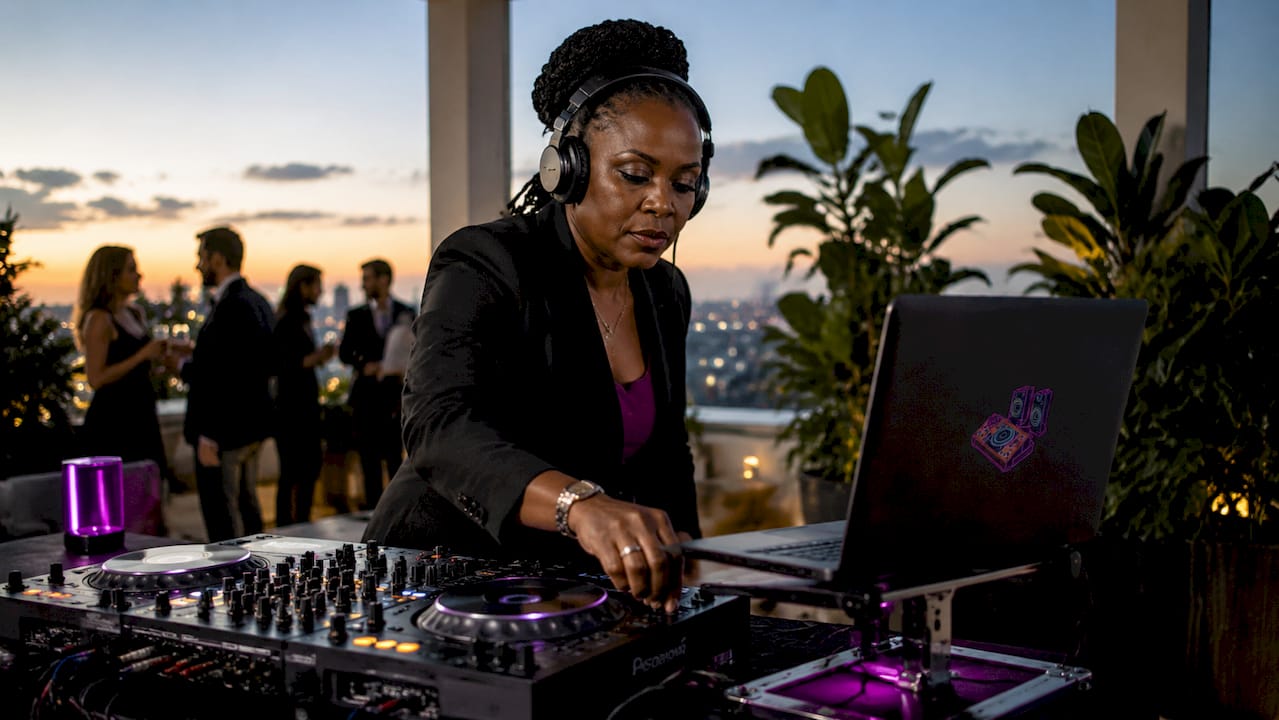
Corporate event planners often underestimate this scope. A DJ who only plays music is a background service. A DJ who actively manages energy, pacing, and technical flow is an event producer in their own right.
How do DJs use BPM progression to shape event energy?
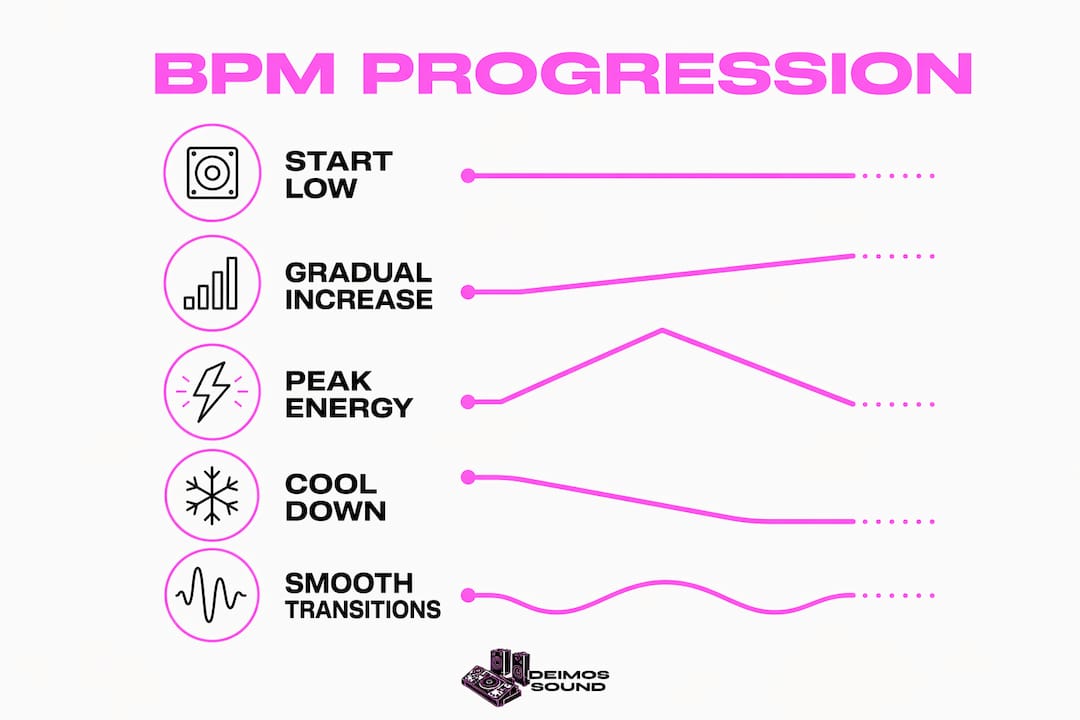
Beats per minute, or BPM, is the technical measure of a track's tempo. The role of BPM in DJ sets is to give the DJ a precise tool for controlling how energized or relaxed the room feels at any given moment. A track at 80 BPM feels calm and conversational. A track at 128 BPM drives movement and excitement. The DJ's skill lies in moving between those states without the audience noticing the shift.
Skilled corporate DJs use gradual BPM increases of 1–2 beats per minute every 3–4 tracks to build guest excitement without being consciously noticeable. This technique maintains engagement significantly longer than events with static background music. The guest never thinks "the music got faster." They simply feel more energized, more social, and more present.
A well-structured DJ set follows three phases:
- Opening phase: Low-energy ambient tracks, typically 70–90 BPM, to ease guests from work mode into social mode
- Peak phase: Progressively higher tempo, building toward the event's social high point, such as dinner, dancing, or awards
- Landing phase: Gradual tempo reduction to close the event on a warm, comfortable note
Harmonic mixing reinforces this structure. When a DJ transitions between tracks that share compatible musical keys, the shift feels natural rather than jarring. Guests stay in the emotional flow rather than being snapped out of it by a clumsy key change.
Pro Tip: Never ask your DJ to start with high-energy dance tracks. Research shows that starting too high-energy too soon is counterproductive. Guests need roughly 30 minutes of lower-tempo music to transition from professional mindset to social mode.
How do DJs read crowds and control event atmosphere in real time?
Real-time crowd reading is the most underappreciated skill a corporate DJ brings to your event. The role of a DJ in party guest engagement is not passive. It requires constant observation of body language, energy levels, and social cues like phone usage or table conversations. A room full of people leaning in and talking loudly signals the DJ to hold the current energy. A room where guests are checking phones and drifting toward exits signals the need for a tempo shift.
Real-time adjustments prevent momentum loss and keep guests engaged throughout the event. The DJ acts as a live feedback loop between the room's energy and the music program. No pre-built playlist can do this. Automation cannot read a crowd.
Corporate DJs also serve as unofficial event emcees. Professional DJs coordinate announcements, cue speakers, and manage transitions between event segments. This role reduces awkward pauses and keeps the program moving without requiring a separate MC hire.
Common engagement pitfalls to avoid:
- Letting silence run for more than 10 seconds between segments
- Playing music too loudly during dinner, which kills conversation
- Ignoring the demographic mix of the audience when selecting tracks
- Failing to brief the DJ on the event's cultural or brand sensitivities
Pro Tip: Brief your DJ on the audience's age range, cultural backgrounds, and the event's tone before the day. A DJ who understands your guest profile can read the crowd far more accurately from the first track.
What technical responsibilities does a corporate DJ handle?
The technical scope of a corporate DJ's work is substantial. Corporate DJs handle microphone and sound system setup, lighting control, and troubleshooting during events to maintain clear audio and appropriate ambiance. This is not a secondary concern. Poor audio at a corporate event damages speaker credibility and frustrates guests.
A professional DJ's technical responsibilities typically include:
- Arriving early for full equipment setup and sound check
- Configuring microphones for speakers, panelists, and award presenters
- Managing speaker volume zones across different areas of the venue
- Coordinating lighting cues to match program segments
- Communicating with venue staff, caterers, and AV teams throughout the event
- Monitoring the timeline and alerting the event coordinator to any delays
- Troubleshooting audio issues without interrupting the program
Experienced DJs bring backup gear and duplicate music libraries to handle technical difficulties without disrupting events. This preparation is what separates a professional from an amateur. When a speaker cable fails mid-event, a prepared DJ switches to backup in seconds. An unprepared one creates a visible, embarrassing gap.
Reliability is the backbone of a corporate DJ's professional value. Planners should always ask about contingency plans before booking.
How do corporate DJs differ from other event DJ types?
Corporate DJs operate in a fundamentally different context than club, wedding, or private party DJs. The distinction matters for planners choosing the right fit.
| Context | Primary focus | Music approach | Key skill |
|---|---|---|---|
| Corporate event | Brand alignment, professionalism | Curated, audience-sensitive | Timeline coordination |
| Wedding | Emotional milestones | Sentimental and celebratory | Crowd pleasing |
| Nightclub | Maximum energy, extended sets | Genre-specific, high BPM | Mixing technique |
| Private party | Host preferences | Flexible, request-driven | Adaptability |
Corporate DJs select music that supports brand image and workplace culture while avoiding inappropriate or off-brand tracks. This requires a level of editorial judgment that club or party DJs rarely need. A track that works perfectly at a nightclub may be entirely wrong for a company awards dinner.
Corporate DJs also manage multi-zone audio, where background music plays in a networking area while a presentation runs in the main hall. This technical complexity requires experience with professional-grade equipment and venue coordination. The role of a DJ in party pacing at a corporate function also demands subtlety. The goal is never to dominate the room but to support it.
A skilled DJ's music selection directly influences brand perception and guest satisfaction during corporate events. That influence extends the DJ's value well beyond entertainment into the territory of event strategy.
How should planners select and brief a corporate DJ?
Choosing the right DJ for a corporate function requires more than checking availability and price. The event DJ consultation process is where planners establish expectations, share event objectives, and confirm the DJ's technical capabilities.
Key questions to ask before booking:
- Does the DJ have documented experience with corporate events specifically?
- Can they provide references from similar functions?
- What backup equipment do they carry?
- How do they handle last-minute program changes?
- Are they comfortable acting as an emcee or coordinating with a separate MC?
- What is their process for learning your brand's music preferences?
Early consultation is the single most effective way to improve DJ performance. A DJ briefed three weeks before the event delivers a far more tailored experience than one briefed the morning of. Share your event timeline, speaker list, audience demographics, and any music restrictions in writing. This gives the DJ time to build a curated set that genuinely fits your event rather than defaulting to a generic playlist.
Establish a communication protocol for the day itself. Designate one point of contact who can relay real-time changes to the DJ without creating confusion. This small step prevents the most common coordination failures at corporate events.
Key Takeaways
A corporate DJ's value is defined by their ability to manage energy, coordinate logistics, and align music with your event's objectives, not simply by the tracks they play.
| Point | Details |
|---|---|
| BPM progression drives energy | Gradual tempo increases of 1–2 BPM every few tracks build excitement without guests noticing the shift. |
| Crowd reading is non-negotiable | Real-time observation of body language and energy cues prevents momentum loss throughout the event. |
| Technical scope is broad | Corporate DJs manage sound systems, microphones, lighting, and backup equipment, not just music. |
| Corporate DJs differ from other types | Brand sensitivity, multi-zone audio, and timeline coordination set corporate DJs apart from club or wedding DJs. |
| Early briefing improves outcomes | Sharing event objectives, audience details, and music preferences weeks in advance produces a more tailored performance. |
Why planners consistently underestimate the DJ's role
I've watched corporate events succeed and fail on the strength of a single decision: whether the DJ was treated as a vendor or a collaborator. Planners who hand a DJ a vague playlist and a start time get exactly what they paid for. Planners who brief the DJ on the event's emotional arc, the audience's professional culture, and the program's key moments get something entirely different.
The common misconception is that corporate events don't need a "real" DJ because the music is just background. That belief ignores what DJs actually manage at the level of temporal architecture. They design the emotional shape of your event. They decide when the room relaxes, when it energizes, and when it quiets for a speaker. No playlist does that. No streaming service does that.
The planners I respect most treat the DJ briefing with the same seriousness as the speaker briefing. They share the event's business objectives, not just the music preferences. When a DJ understands that the goal of the evening is to strengthen team cohesion after a difficult quarter, they make completely different choices than a DJ who was simply told "play something upbeat." That difference shows up in the room, and your guests feel it even if they can't name it.
— Otterpop
Deimos Sound brings professional DJ expertise to your corporate events
Corporate event planners who want music, lighting, and technical coordination handled by one experienced team have a clear option in Deimos Sound.
Deimos Sound specializes in tailored DJ sound and lighting services for corporate functions, combining expert music curation with professional audio-visual support. Every event gets a custom approach built around your audience, your brand, and your program timeline. The team arrives prepared with backup equipment, a detailed briefing process, and the technical range to manage everything from background networking music to full dance floor sets. Rates start at $75 per hour, making professional corporate DJ services accessible without compromising on quality. Reach out to Deimos Sound to discuss your next event.
FAQ
What does a DJ actually do at a corporate event?
A corporate DJ manages music selection, BPM progression, crowd energy, microphone coordination, and lighting throughout the event. They also act as an unofficial emcee, cueing speakers and managing transitions between program segments.
How much does a corporate DJ cost?
Corporate DJ pricing typically ranges from $400 to $2,500 per event depending on size and duration, with hourly rates generally falling between $200 and $300. Deimos Sound offers rates starting at $75 per hour.
Why does BPM matter at a corporate event?
BPM controls how energized or relaxed guests feel at any moment. Gradual BPM increases of 1–2 beats per minute across several tracks build excitement naturally, keeping guests engaged without abrupt shifts in mood.
How is a corporate DJ different from a wedding or club DJ?
Corporate DJs prioritize brand alignment, audience sensitivity, and timeline coordination over maximum energy or personal requests. They manage multi-zone audio and avoid tracks that could conflict with a company's culture or values.
When should I brief my DJ before a corporate event?
Brief your DJ at least two to three weeks before the event. Share your program timeline, audience demographics, brand guidelines, and any music restrictions so the DJ can build a set tailored to your specific objectives.