
DJ turntablism is defined as the performance art of using turntables and a mixer as musical instruments to manipulate recorded audio and create original rhythmic compositions live. The term separates a turntablist from a traditional DJ the way a guitarist differs from a jukebox operator. Rooted in 1970s hip-hop culture, turntablism treats the DJ setup as a creative instrument rather than a playback device. Core techniques include scratching, beat juggling, crossfader manipulation, and needle dropping. Understanding what DJ turntablism means requires grasping both its technical demands and its deep cultural roots.
What does DJ turntablism mean, and how is it defined?
Turntablism is defined as the art of manipulating recorded audio through turntables and a mixer to produce new live rhythmic and percussive compositions. The word itself entered mainstream vocabulary in the 1990s, but the practice traces back to DJs in the South Bronx during the 1970s. Pioneers like DJ Kool Herc isolated and extended the percussive "break" sections of funk and soul records, laying the foundation for what would become a full performance discipline.
The critical distinction is intent. A traditional DJ selects and blends tracks to maintain a crowd's energy. A turntablist treats the turntable as an instrument, actively shaping sound in real time rather than cueing pre-recorded sequences. This shift in intent transforms the turntable from a playback tool into a live instrument capable of producing sounds no studio recording contains.
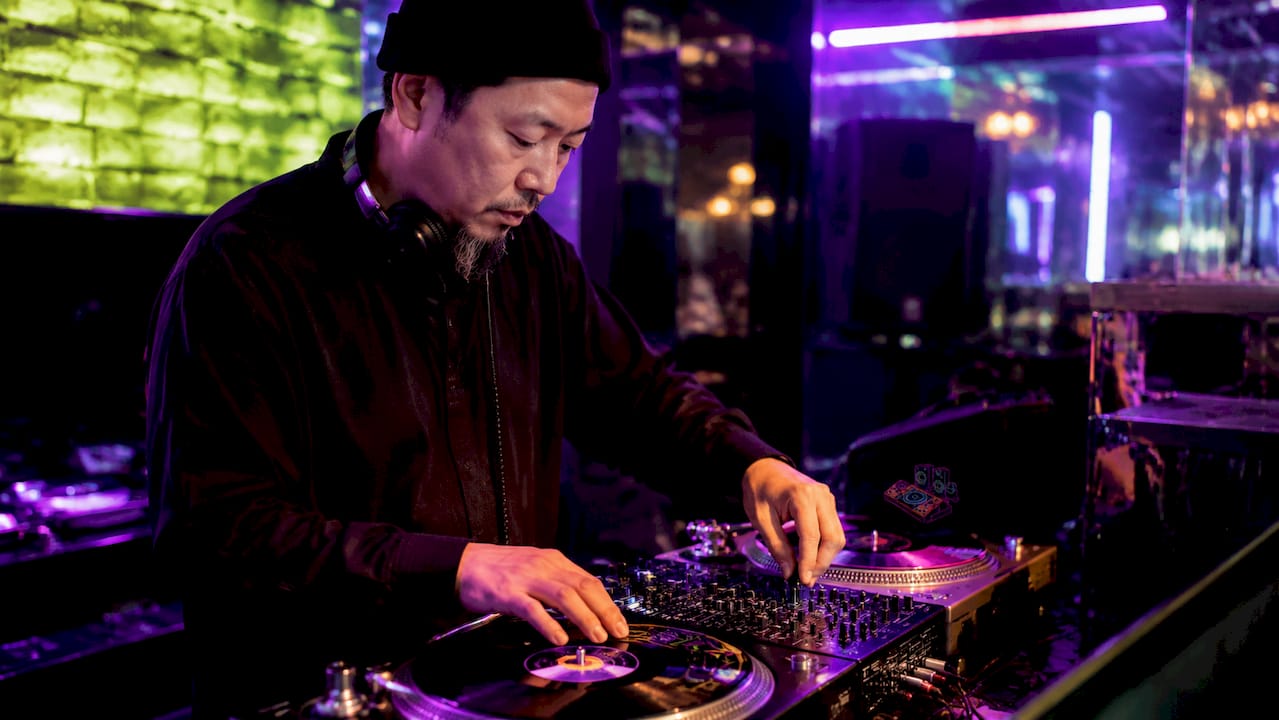
Turntablism also carries a competitive tradition. Events like the DMC World DJ Championships have formalized the art, requiring performers to demonstrate technical skill, stage presence, and musical creativity within timed routines. That competitive structure reinforced turntablism's identity as a distinct discipline within music performance.
What are the fundamental techniques and skills involved?
Turntablism techniques extend well beyond scratching, though scratching remains the most recognized entry point. The full skill set includes cueing, beat juggling, needle dropping, and routine design, all working together to produce a cohesive musical performance.
Core scratching techniques
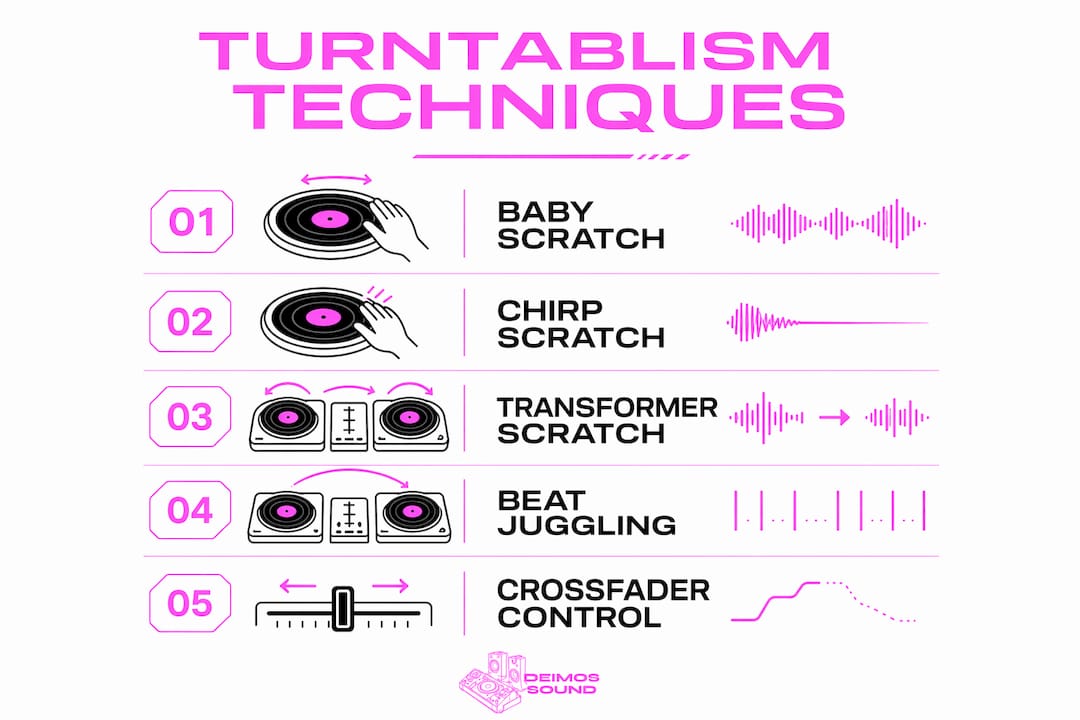
Scratching involves moving a vinyl record back and forth under the needle while controlling the crossfader to shape the resulting sound. The main scratch types progress in complexity:
- Baby scratch: The record moves back and forth with no fader manipulation. This is the starting point for every beginner.
- Chirp scratch: The fader opens and closes at specific points in the record movement, creating a sharp, bird-like sound.
- Transformer scratch: Rapid fader cuts interrupt the sound in a rhythmic pattern, mimicking a stutter effect.
- Crab scratch: Four fingers roll across the crossfader in sequence, producing fast, machine-gun-style cuts. This is one of the most technically demanding scratches.
Beat juggling and crossfader control
Beat juggling uses two copies of the same record on separate turntables to extend and rearrange breakbeats in real time. The DJ alternates between the two platters, catching specific drum hits and looping them manually. This technique demands drumming-like rhythmic precision and hand-ear coordination that takes months to develop. The crossfader is the backbone of both scratching and juggling. A scratch-capable crossfader cuts audio instantly with no lag, which is non-negotiable for clean technique.
Pro Tip: Practice your crossfader hand and your record hand separately before combining them. Most beginners rush to combine both too early, which builds sloppy habits that are hard to unlearn.
What equipment and setup do you need for turntablism?
The right hardware is not optional in turntablism. Technique depends directly on equipment quality and configuration. A basic DJ hardware setup for turntablism requires at minimum two turntables and a mixer, but the specific type of each component matters enormously.
Turntables: direct-drive only
Direct-drive turntables are essential for turntablism because they withstand the physical stress of scratching and respond instantly to hand movement. Belt-drive turntables are unsuitable for two reasons. First, the rubber belt that drives the platter breaks under repeated scratching stress. Second, belt-drive motors introduce latency between hand movement and platter response, making precise technique impossible.
Slipmats and mixer requirements
Slipmats replace the standard rubber mat that sits between the platter and the record. They reduce friction so the record can be moved freely while the platter continues spinning underneath. Without a slipmat, the record and platter move as one unit, eliminating the independent record control that scratching requires.
The mixer must include:
- A scratch-capable crossfader with a sharp, instant cut-off
- Adjustable crossfader curve settings
- At least two phono inputs for turntable connections
- A reliable EQ section for tonal shaping during performance
Digital vinyl systems
Digital vinyl systems (DVS) like Serato Scratch Live allow turntablists to control digital audio files using a timecode vinyl record on a real turntable. This setup preserves the physical feel of vinyl manipulation while expanding the available sound library. DVS setups are now standard in both practice environments and professional performances.
Pro Tip: Buy the best crossfader you can afford before upgrading anything else. A sluggish or imprecise fader limits every technique you attempt, regardless of how good your turntables are.
How does turntablism differ from traditional DJing, and why does it matter culturally?
Traditional DJing centers on music selection, track blending, and reading a crowd. Turntablism centers on live sound creation. The two disciplines share equipment but diverge completely in purpose and execution.
"Turntablism is not about what records you play. It is about what you do to them. The turntable becomes a percussion instrument, a melodic tool, and a compositional device all at once. That is what separates a turntablist from a DJ who simply mixes."
This distinction has profound cultural weight. Turntablism emerged from hip-hop as one of its four foundational elements alongside MCing, breakdancing, and graffiti art. It gave DJs a creative voice that was entirely their own, independent of the music they played. The DMC World DJ Championships, founded in 1985, gave that voice a global stage and a competitive framework that elevated the art form.
Several common misconceptions still cloud public understanding of turntablism:
- Scratching equals turntablism: Scratching is one technique within a much larger practice. Turntablism also includes beat juggling, cueing, phrasing, and routine architecture.
- Turntablism is only for hip-hop: Turntablists perform across genres including jazz, electronic music, and experimental sound art.
- It requires no musical training: Turntablism demands rhythmic precision, musical phrasing, and performance structure comparable to any live instrument.
Turntablism also influenced studio production. Producers began sampling and recreating scratch sounds in recordings, and the rhythmic vocabulary of turntablism shaped the sound of hip-hop, drum and bass, and electronic music for decades. The art form continues to evolve as turntablists collaborate with orchestras, jazz ensembles, and live bands, proving its range extends far beyond the DJ booth.
How can aspiring DJs start learning turntablism?
Learning turntablism follows a clear progression. Skipping steps creates technical debt that slows development significantly. The most effective path builds each component skill independently before combining them.
- Start with the baby scratch. Move the record forward and back in a steady rhythm with no fader involvement. Focus entirely on consistent timing and smooth record movement.
- Isolate crossfader practice. Practice opening and closing the fader in rhythm without touching the record. This builds the muscle memory your fader hand needs independently.
- Combine record and fader. Once both hands work cleanly in isolation, combine them. Start with the chirp scratch before attempting transformer or crab techniques.
- Choose the right practice samples. Crisp, percussive sounds help you hear timing errors immediately. A sharp vocal hit or a tight snare drum reveals mistakes that a soft pad sound would mask.
- Learn beat juggling basics. Set up two copies of a record with a clear breakbeat. Practice catching the same drum hit on both platters alternately. Start slow and prioritize accuracy over speed.
- Record your practice sessions. Listening back reveals timing inconsistencies you cannot hear in the moment. Video recording also exposes inefficient hand movements.
Mastering fundamental control elements individually before combining them is the single most important principle in turntablism education. Professionals consistently identify premature complexity as the primary cause of poor technique in beginners.
Pro Tip: Use a metronome during early practice. Turntablism is rhythmic music performance. Developing an internal clock from the start separates musicians from noise-makers.
Key Takeaways
Turntablism is a distinct performance art that treats turntables and a mixer as live instruments, demanding technical precision, cultural awareness, and consistent practice to master.
| Point | Details |
|---|---|
| Turntablism defined | It is the art of using turntables and a mixer as instruments to create live rhythmic compositions. |
| Core techniques | Scratching, beat juggling, crossfader manipulation, and cueing all work together to build musical routines. |
| Essential equipment | Direct-drive turntables, slipmats, and a scratch-capable mixer are the non-negotiable hardware foundation. |
| Cultural significance | Turntablism originated in the 1970s hip-hop and gained global recognition through competitions like the DMC World DJ Championships. |
| Learning path | Isolate record movement, fader timing, and rhythm separately before combining them to avoid poor technique habits. |
Turntablism as a living art form: a practitioner's view
Turntablism is the most misunderstood discipline in DJ culture, and I think that misunderstanding actually protects it. Because most people assume it is just scratching, the deeper practice remains a space where serious artists separate themselves from casual performers.
What strikes me most is how turntablism demands the same mental framework as playing a drum kit or a piano. You are not selecting music. You are making it, in real time, with your hands, in front of an audience. That pressure is clarifying. It forces you to develop genuine musicality rather than relying on the quality of your record collection.
The current evolution of turntablism is genuinely exciting. Artists are integrating DVS technology with live looping, effects processing, and collaboration with acoustic musicians. The turntable is becoming a node in a larger live performance system rather than a standalone instrument. That expansion does not dilute the art. It extends it.
My advice to anyone starting out: resist the urge to perform before you can play. Spend three months on baby scratches and beat juggling basics before you touch a crab scratch. The foundation determines everything that follows.
— Otterpop
Deimos Sound and the world of live DJ performance
Turntablism represents the highest expression of what a DJ can do with a turntable and a mixer. At Deimos Sound, that same passion for music performance drives every event we support.
Deimos Sound delivers high-energy DJ events with professional audio and lighting tailored to each occasion, starting at $75 per hour. Whether you are planning a private party, a corporate gathering, or a large-scale event, Deimos Sound brings the technical expertise and musical depth that transforms a room. Explore the story behind Deimos Sound to understand the music culture that shapes every performance we deliver.
FAQ
What is the simplest definition of turntablism?
Turntablism is the art of using turntables and a mixer as musical instruments to create new live rhythmic compositions, distinct from standard DJing which focuses on track selection and blending.
What techniques are most important for turntablism beginners?
Beginners should start with the baby scratch to build record control, then progress to chirp and transformer scratches as crossfader timing develops. Isolating each hand's movement before combining them prevents poor technique habits.
Do you need vinyl records to practice turntablism?
No. Digital vinyl systems use timecode records on real turntables to control digital audio files, preserving the physical feel of vinyl manipulation while expanding the available sound library.
How does turntablism connect to hip-hop culture?
Turntablism originated in 1970s South Bronx hip-hop as one of the genre's four foundational elements. It gave DJs a distinct creative voice and evolved into a competitive art form recognized globally through events like the DMC World DJ Championships.
Is scratching the same as turntablism?
Scratching is one technique within turntablism, not the whole practice. Turntablism also includes beat juggling, cueing, needle dropping, and routine design, all combined to produce a complete musical performance.